Search This Blog

Saturday, October 21, 2017

The Enneagram Wars

 [I am posting this article by Subhuti from the Osho News. I found it very interesting.] 

HEALING & MEDITATION

OCTOBER 21, 2017

Subhuti writes in detail on how a method for enlightenment ended up in court. “The Enneagram’s deepest value lies within the context of meditation. That is the turning point, at which self-understanding becomes spiritual transformation.”

enneagram tug of war

Leaving Arica for Pune

By the time the bullets started flying, I had left the battlefield. I had bid farewell to Oscar Ichazo, creator of the modern Enneagram system. I had written a bitchy letter to his staff at the Arica School in New York, arrogantly informing them I was no longer interested in being an Arica trainer and was off to India to complete my spiritual education.

This was 1976. A couple of years earlier, I’d been an enthusiastic, gung-ho ‘Arican’. I was convinced Arica was going to save the world. Oscar had warned us of a great darkness that was about to fall on humanity and we, as little Arican light bulbs, would be its shining saviours.

Nice, spiritually romantic idea. But there were a few problems: First, the darkness didn’t fall. Second, humanity wasn’t interested in being saved. Third, the light bulbs didn’t work. So, when an old girlfriend of mine came back from an ashram in Pune, India, wearing orange clothes and glowing with energy, I was ready to be seduced. Just kissing her was an orgasmic experience.

If she hadn’t been leaning out of a train window while I was standing on the platform, and the train hadn’t started moving, I think we’d still be kissing today. Anyway, I received her energy transmission. I got the message, passed from mouth to mouth: something wonderful and slightly scary was going on in Pune. I had to go and check it out.

A few weeks later, when I arrived at the ashram, I sat in front of Osho and he asked me how long I was going to stay. I heard myself reply “For ever.” Ooops! I hadn’t meant to say that, I still don’t know why I did, but it turned out to be true. I’d found the door to shunyata, divine emptiness, as well as sexual liberation, ecstatic celebration and chaotic meditation.

The combination was irresistible.

Fourteen years and many adventures later, I was sitting in the Pune ashram’s cafe, drinking a cup of chai, when someone handed me a book titled Enneagram: Understanding Yourself and the Others in Your Life, by Helen Palmer.

“My God, I used to teach this stuff!” I exclaimed, thumbing through Palmer’s detailed description of the Enneagram’s nine personality types.

“Why don’t you teach it here?” asked the book’s owner. So I got together with another ex-Arican, who’d conveniently kept all his notes, and we did.

The legal battle between Helen Palmer and Oscar Ichazo

Meanwhile, back in New York, Helen Palmer and Oscar Ichazo were locked in a legal battle that went all the way to the US Supreme Court. It’s ironic that a method for enlightenment should become a cause for combat. But then again, when you look at the world’s religious history, it’s not surprising. So much blood has been shed in the name of spiritual truth.

The Arica Institute, with Ichazo’s blessings, accused Helen Palmer of copying his Enneagram doctrine and infringing his copyright, requesting the American courts to block distribution of thousands of paperback copies of her book. The courts refused, saying that copyright law did not cover most of what Ichazo was teaching. The secrets of the Arica school had escaped into the public arena.

Oscar was upset, Helen Palmer was happy and the Enneagram mushroomed into a New Age phenomenon, generating hundreds of ‘experts’, scores of trainings and dozens more books. In a way, it was Oscar’s fault. He should have published his own book back in the early 1970s, when he had the whole system to himself.

But, alas, the Bolivian-born mystic, whose native language was Spanish, had a complex and difficult way of expressing himself and was never able to write a decent book in his whole life. There was another, more profound reason, why Oscar was distressed. Whether his methods were effective, or not, Ichazo was a genuine mystic. He wanted to help people become enlightened.

He knew that the ego blocked the path to cosmic consciousness and believed that the Enneagram’s description of nine ego-fixation points could dissolve this basic obstacle. In other words, as Ichazo explained to us, if we could see the ego clearly enough, in its raw, naked form, it would collapse, opening an inner space for the manifestation of our Divine Essence.

Poor Oscar! He obviously had no idea how stubborn and adaptable the human ego can be. The ego is the all-time survival expert – I speak from personal experience.

Ego Plan, Type Seven

For example, when I was informed by an Arica trainer in New York that I was Ego Plan, Type Seven, my ego took a massive hit. For a while, I was in a kind of daze, shocked to my core at this revelation of how my ego functioned.

It was a powerful experience. But pretty soon, like other Aricans whom I knew, my ego had recovered from this knock-out blow, climbed back off the floor, and was again in business. After all, I had a new identity. Now I was an Arican, a Plan, feeling spiritually superior to the rest of our sleepy humanity and happily giving Enneagram sessions to everyone around me.

But, as I say, Oscar was a mystic and his intentions were good. He’d wanted to keep the Enneagram system secret, because he knew it worked best as a tool for ego-reduction within the intense atmosphere of a closed school.

Helen Palmer, on the other hand, was no mystic. She’d made sociological studies of the nine personality types, describing their difficulties and making suggestions how to smooth out the rough edges. It was the exact opposite of what Ichazo had intended. He wanted to destroy the ego. Palmer was telling people how to improve it.

But how did Palmer get hold of the Enneagram in the first place?

Come to think of it, how did Ichazo get hold of it?

Let’s back up and take a look.

Where does the Enneagram come from?

The Enneagram, as many people know, is an ancient symbol. It was brought to the attention of modern Europeans by George Gurdjieff, the Armenian mystic, who claimed it represented the laws of the universe. He used the symbol mainly in music and dance. He also asserted that every individual possessed a “chief characteristic”, but at no time did he mention nine personality types or try to relate these types to the Enneagram symbol.

Gurdjieff had visited many Sufi schools as a young man – documented in his book Meetings with Remarkable Men – so it was assumed he’d learned the symbol from them. Now it seems more likely that it was taught to him, as a boy, by his tutors, who were esoterically-inclined monks, belonging to the Greek Orthodox tradition of the Christian faith.

At this point, we find ourselves in historical regression, because the next question is: where did these monks get the symbol? They seemed to have inherited it from a group of early Christian mystics, living in Egypt, called the ‘Desert Fathers’, who may, or may not, have linked the Enneagram symbol to the so-called Seven Deadly Sins, adding two more for good measure, making nine in all: anger, pride, deceit, envy, avarice, fear, gluttony, lust and sloth.

This, however, is not the beginning of the story. The Desert Fathers, being mostly Greeks, may have picked up the symbol from the teachings of Ancient Greeks like Pythagoras, Plato and Plotinus. However, even if all this is true, Oscar Ichazo denied that he got the Enneagram symbol from Gurdjieff, so there was no clear line of continuity.

So, where did he get it? For a while, all kinds of exotic rumours buzzed around the Arica School in New York. My favourite one went like this:

Oscar had undertaken a dangerous solo pilgrimage through remote areas of the Hindu Kush Mountains, in Northern Pakistan and Afghanistan, meeting with secret Sufi schools and receiving their sacred knowledge.

Actually, the truth was more mundane: he got it from his uncle’s library. In a 1996 magazine interview, Ichazo explained that when he was 12-13 years old, he inherited an esoteric library from his uncle Julio, who was a philosopher.

Since he’d been having frightening, out-of-body experiences from the age of six, Ichazo hungrily devoured these books, hoping to find reassuring answers for his paranormal states. He came across the Enneagram symbol while studying an ancient text from the Chaldean civilization, which existed around 600 BC, in what is now known as Iraq, and whose citizens appear to have been fascinated by numbers.

For example, the Chaldean system of numerology is considered to be more accurate, with more mystical depth, than Pythagorean numerology. So it makes sense that an intrinsically mathematical symbol like the Enneagram would be embraced as part of their metaphysics. And where, might one ask, did the Chaldeans get the symbol?

Nobody knows and we cannot ask them, because in 536 BC, Cyrus the Great crushed their little realm, adding it to his ever-expanding Persian Empire.

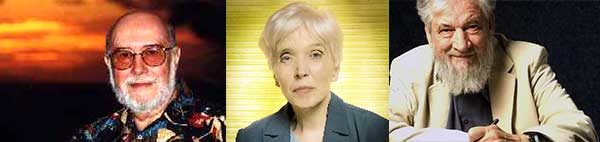
Oscar Ichazo, Helen Palmer and Claudio NaranjoOscar Ichazo, Helen Palmer and Claudio Naranjo
Oscar Ichazo, the Theosophical Society and channelled revelations

Meanwhile, returning to the twentieth century, Oscar Ichazo, studying in his library, also found evidence of the symbol in the teachings of certain Sufi schools and in the more recent Theosophical movement. By the age of 18, Ichazo had joined a group of Theosophists in Buenos Aires who discussed all kinds of esoteric issues, including Gurdjieff’s secret sources and the meaning of the Enneagram symbol. Ichazo soaked up all this information like a sponge and by his mid-twenties possessed a vast store of knowledge.

As a culmination, the placing of nine ego types on the Enneagram symbol seems to have come to Ichazo through personal revelation. In other words, he channelled it, attributing his illumination to a couple of disembodied entities: the Archangel Metatron, and a Sufi entity, the Green Qutub.

This sounds bizarre, if we envisage these entities to be blond-haired angels flapping their golden wings amid white puffy clouds. But to Ichazo, these were states of consciousness. Metatron represented a function of higher mind, which gave Ichazo the blueprint of his whole Arica system, while the Green Qutub personified surrender to divine will and receiving baraka, the energy of divine grace.

So far, so good. But, as is often the case with mystics, problems began for Ichazo when he started to teach his knowledge to others. As long as he confined himself to esoteric groups in South America, things went pretty well. But, in 1970, he invited a group of Americans from the Esalen Institute in Big Sur, California, to participate in a three-month training in the town of Arica, Chile. This, by the way, is how Oscar’s school got its name, because it began with the training in this obscure city.

Among those who answered the call was Claudio Naranjo, a Chilean-born psychiatrist who was living and working in the United States.

Enters Claudio Naranjo

Naranjo was bearded, brainy and hungry. He was no ordinary psychiatrist. He’d trained in Gestalt Therapy with Fritz Perls, dabbled in psychedelic drugs and was obsessed with contacting the elusive “Sarmoun Brotherhood” whom Gurdjieff said possessed great secrets of human transformation.

Astonished by the range of Ichazo’s knowledge, Naranjo was convinced the Bolivian knew the whereabouts of this mysterious Sufi school. But, alas, as far as we know, Naranjo never got the brotherhood’s postcode from Oscar.

After the training in Chile, Ichazo flew to New York and set up his new school in the middle of Manhattan. I still remember the address: 24 West 57th. We called it ‘GHQ’, short for ‘general headquarters’, the hub of a growing network of Arica branches that spread through the US and Europe.

Meanwhile, Naranjo had returned to Berkeley, California, where he began to develop psychological profiles of the nine ego fixation points. He also began to give lectures on the subject. Oscar Ichazo was not happy about this. He’d already criticised Naranjo on several occasions for being overly intellectual and was worried that his precious Enneagram would now be distorted. As it turned out, Naranjo’s eagerness to adopt the Enneagram as his own brainchild was nothing compared to the predatory instincts of the people who attended his lectures.

Helen Palmer, Bob Oakes, Almaas and Faisal

Among those present at Naranjo’s discourses were Helen Palmer, a Jesuit priest called Bob Oakes, Hameed Ali (who adopted the pen name A H Almaas) and Faisal Muqaddam. All of them would catch the Enneagram ball thrown to them by Naranjo and run with it, developing their own systems, writing their own books, offering their own trainings.

Later, Naranjo would complain to journalists that his precious ideas had been stolen by these people without giving him credit. How ironic! Naranjo, it seems, was incapable of seeing how he’d done exactly the same thing to Ichazo. Indeed, Naranjo even went so far as to claim that it was he, not Ichazo, who’d developed the psychological dimension of the Enneagram.

This is simply untrue. Back in 1974, when I was participating in a training at the Arica Institute in New York, we were given psychological profiles of all nine types as part of our instruction, coming directly from Ichazo. Certainly, Naranjo developed these profiles further, fleshing out the psychological aspects of each ego fixation, while Helen Palmer provided an even broader view of each type’s behaviour and attitudes. But the source of all this was unquestionably Ichazo himself.

For this reason, it seems to me that Oscar could have won the court case, if he’d been a bit more street savvy. But in some ways he was his own worst enemy. When asked by the court to describe his Enneagram theory, he replied, “It is not a theory. It is a fact.”

“Well, you can’t copyright a fact,” the court replied. Case dismissed.

Enneagram books

New books on the market, by Naranjo, Helen Palmer, Don Riso

In reality, of course, it was a theory. But Ichazo was so insistent on asserting the objective reality of his precious system that he ended up shooting himself in the foot.

In 1990, Naranjo published a book about the Enneagram system, titled Ennea Type Structures, consisting of a dense labyrinth of psychological terms, mixed thickly with Christian theology. His book didn’t do well in the marketplace for the simple reason that few people could understand what he was talking about.

It was Helen Palmer, publishing around the same time, who blew the doors to the mainstream wide open and successfully introduced the Enneagram to the general public.

Meanwhile, a Jesuit student called Don Riso had beaten everyone in the race to the book stores. He’d read Bob Oakes’ notes from Naranjo and promptly wrote his own book, titled Personality Types: Using the Enneagram for Self-Discovery.

With these two books, penned by Palmer and Riso, the modern Bibles of the popularized Enneagram faith were born. Each step away from Ichazo had diluted the power of the system, making it tamer and more palatable, and when an amusing book, illustrated with cartoons, titled The Enneagram Made Easy was published by two of Palmer’s students, the social sanitization process was complete.

Meditation is beyond psychological, philosophical and spiritual concepts

Only a Disney movie about the nine types would now render it more cosily impotent. Which brings me back to that moment in the cafe, in Pune, in 1990, when someone handed me Helen Palmer’s book and suggested I should start teaching the Enneagram in the ashram. I had no problem with it. After all, I’d learned the system from Ichazo, so I had the original teaching in my hands. More importantly, I now had a much wider spiritual context in which to place it.

Osho was giving us a vision of spirituality that went beyond anything devised by Ichazo: a vision that began in meditation and ended in No Mind. In other words, one can study everything that Ichazo, Naranjo, Almaas, Faisal and Palmer have to offer in the way of psychological, philosophical and spiritual concepts, and still come up short.

Why? Because, as Osho explained many times in his discourses, the ultimate spiritual experience lies beyond anything the mind can conceive. It is beyond the realm of thinking. It is beyond the realm of self. It is an experience of silence, emptiness, infinite space.

Try writing a book about nothingness. Even the inventive creativity of those who have plagiarised Oscar Ichazo’s Enneagram system would have a hard time doing that. To me, the Enneagram is a handy tool for self-understanding and that’s why I continue to teach it. It has helped me get to know my personality and is a useful way of watching my mind, as it jumps through its usual hoops.

I can recommend it to anyone. But its deepest value lies within the context of meditation. That is the turning point, at which self-understanding becomes spiritual transformation.

SubhutiSubhuti gives workshops about the Enneagram all over the world and also gives individual online Enneagram sessions. Contact: anandsubhuti (at) yahoo.com

More articles on the Enneagram, also by this author on Osho News



Saturday, January 14, 2017

Case 5 of the Mumonkan and Step 1

1/13/17

Case 5 of the Mumonkan


Mumon, Wu-men Hui-hai (無門慧開), the Chinese Ch’an Master says, "If you can respond to this dilemma properly, you give life to those who have been dead and kill those who have been alive." 


Here is Case 5, "Hsiang-yen: Up Tree." 


The priest Hsiang-yen said, "It is as though you were up in a tree, hanging from a branch with your teeth. Your hands and feet can't touch any branch. Someone appears beneath the tree and asks, `What is the meaning of Bodhidharma's coming from the West?'”


If you do not answer, you evade your responsibility. If you do answer, you lose your life. What do you do?"

______


It has been at least 6 years since I took up the case. I told another story about Hsiang-yen in a piece I wrote about a difficult and wonderful conversation that I had with my mother a few months before she died ("The Gift of Tears"). Hsiang-yen must have been an immensely gifted teacher if he continues to inspire others to be honest and human more than a thousand years after his death.


Today I find myself totally swept up in the hanging man's dilemma as I begin to re-work Step 1 of the 12 Steps. The Big Book of Alcoholics Anonymous puts the first step in simple, straightforward language: "I admit that I am powerless over [alcohol, drugs, food, sex]—that my life has become unmanageable." It's just the first step on a journey, and there is a story connected with my personal surrender.


Even if I'd never heard of Bodhidharma, there are questions in my life that I can't evade—my life depends on my answer. It might not be entirely clear to a 21st-century reader that the question about Bodhidharma coming to the West carries enormous weight for anyone practicing with a Zen master. My answer unlocks the wonder of practice and the Buddha Way.


At my first 12 Step meeting, when asked, "Are there other alcoholics/addicts present?" I automatically said, "Yes." I didn't grasp that the question was a life or death issue, that it carried all the weight of the person hanging by his or her teeth. I certainly didn't realize that it would turn my world upside down. I was about to learn that answering it truthfully meant that I was about to lose a life I'd become comfortable with, a life of deception I loved in a weird, perverted way. I'd learned to talk my way around my addiction so well that I even believed its lies.


I had been practicing meditation for decades, but I missed the immediacy and urgency in that question—right now, right here, people in this room were suffering real biological and psychological effects of drug and alcohol abuse. If I'd been paying closer attention, it might have been easier to see the delusions I'd have to give up, and admit that I'd lost control of my life, which is the baseline for any real conversation about sobriety. Another question follows an honest yes: could I examine the roots of my addiction clearly and move beyond denial? My sponsor was very direct: “Cut the bullshit and get real.” We all need real friends we can talk with, men and women who leave any pretense at the door.


Both the spirituality of the Big Book and Zen, I think, start from the same place: what in my experience got me stuck? It’s my dilemma, not the person on the cushion next to me, or the homeless guy stinking of urine on the bus that I can’t move away from. In Zen, I am never asked to believe anything outside my own experience, not even for a split second.


What transformed this question for me from an intellectual consideration about the nature of addiction and alcoholism to one with all the force of Bodhidharma's coming to the West and facing the wall for 9 years in meditation? My roommate committed suicide, and I found myself hanging from the branch by the skin of my teeth.


I came home to discover my roommate's bloated body had been dead for at least three days. Just the smell of the house was overwhelming. The shock sent me spinning emotionally and psychologically. The police and medical examiners suggested that I call a friend. The man I called came right over, put an arm around my shoulder, and listened without any judgment to whatever came out of my mouth as they carried Dean's body down the stairs. 


My response was to lapse into an uncontrolled rage of using drugs and drinking. As I look back over those few days and weeks, Ash proved the depth of his friendship: he wouldn't allow me to play the victim, "Oh, you poor guy, how horrible!" or indulge any self-importance or fake heroism to let myself off the hook. He told me that even if I was just a guy who happened to be standing by when a tragedy unfolded, I still had to clean up the mess before I could move on. I had no other choice if I was going to choose life. He encouraged me to face the circumstances without drama and get it done. And he took me to a meeting. Friends don't get any better.


A long meditation practice follows me into the 12-step work, not as baggage but as a friend. When I listen to someone in one of the rooms coming to terms with the concept of a Higher Power, having been told that his or her program depends on acknowledgment and surrender to Something greater than the self, I can only admire the struggle and right-mindedness of their effort. My own experience was very similar. At some point, the practice of meditation, or maybe just growing older with more life experience, I dismantled most of the conceptual notions I had believed and put my trust in, but what replaced it was a far more intimate sense of how I am, at the core of my being, connected to the profound inner workings of the universe.


And even though my own inner experience started to become clear only after long hours on the meditation cushion, I know that this path is open to anyone, even in the blink of an eye. So meditate. Just do it.


The instructions to enter the koan’s world are really quite simple: Sit down, straighten out my spine so that I can stay awake and alert, focus on my breath, pay attention. That’s enough meditation instruction to get started. Then, as I settle in, if I choose, I can get real about how I respond to Hsiang-yen’s question, what do you do when you're hanging from a branch by your teeth? My life depends on my answer, where, really, no kidding, I'm going to fall into an abyss when I open my mouth. I don’t believe anything, not even for a split second, that I have not experienced myself, but I have also come to trust, thanks to my teachers and my own experience, that the koan will shake an honest answer loose.


Perhaps our answer allows us to simply fall into the unknown and follow the example of the trees' own leaves in the Fall. Thank you, Lucille Clifton, for the capping verse:


The Lesson Of The Falling Leaves


the leaves believe

such letting go is love

such love is faith

such faith is grace

such grace is god

i agree with the leaves


Thursday, May 16, 2013

Sonja Margulies Roshi and a note about Dharma Transmission


Sonja Fenne Margulies (March 7, 1931 - May 5, 2013)

Sonja Margulies-Fenne began Zen practice in 1968, was ordained in 1975, and received dharma transmission from her teacher Kobun Chino Roshi in 1983. For many years, she was the co-editor of The Journal of Transpersonal Psychology.


May 15th, 2013

I just received word that Sonja Margulies-Fenne died in Salt Lake City, where she had moved to be with her son, Peter. She was 82.

Her Zen teacher, Kobun Chino Roshi, gave her a stick in 1983. She told me the story about her dharma transmission that might fit into the current conversation about authentically authorized Zen teachers. She had been practicing for about 15 or so years with Kobun, who taught at SF Zen Center with Suzuki Roshi, and he—Sonia’s words—wanted to cut the umbilical cord and allow her to stand on her own feet. She resisted for one reason or another, and, as she told me, they went back and forth, and back and forth, reaching a kind of koan quality, “What do I do with this one precious life of mine?”

At the end of one sesshin, during her exit dokusan, again they talked, and once again, seemed to arrive at no solution that satisfied her. (I think that Sonja was telling me, just like she told Kobun, that she didn’t want to give up her life on the beach in Santa Cruz, her writing, her poetry, her interest in psychology, and especially the cozy conversations with friends and her daughter Robin). So she got up and bowed to Kobun just as any good priest would honor his or her teacher. As she turned around and put her hand on the doorknob, Kobun called out, “Sonja!” When she turned her head, he threw his stick at her. No time to think, she reached out and grabbed it.

Although she did many things expected of a Soto lineage holder, she remained very low key. Her practice center was the living room couch in her simple Santa Cruz beach cottage. Her teaching never lost the tone of a cozy conversation. And the depth of her love for the dharma shone through her self-care when she survived breast cancer and the care she gave her daughter, Robin, while she died from cancer. Beyond words.

She was a wonderful woman and an inspiring teacher.

Local News: Poems by Sonja Marqulies

Lenore Friedman wrote about Sonja in Meetings with Remarkable Women: Buddhist Teachers in America

Thursday, December 13, 2012

Sister Kuon Elaine MacInnes Roshi

 Originally posted December 12th, 2012

“Spirituality is what you do with those fires that burn within you.” -Sister Elaine


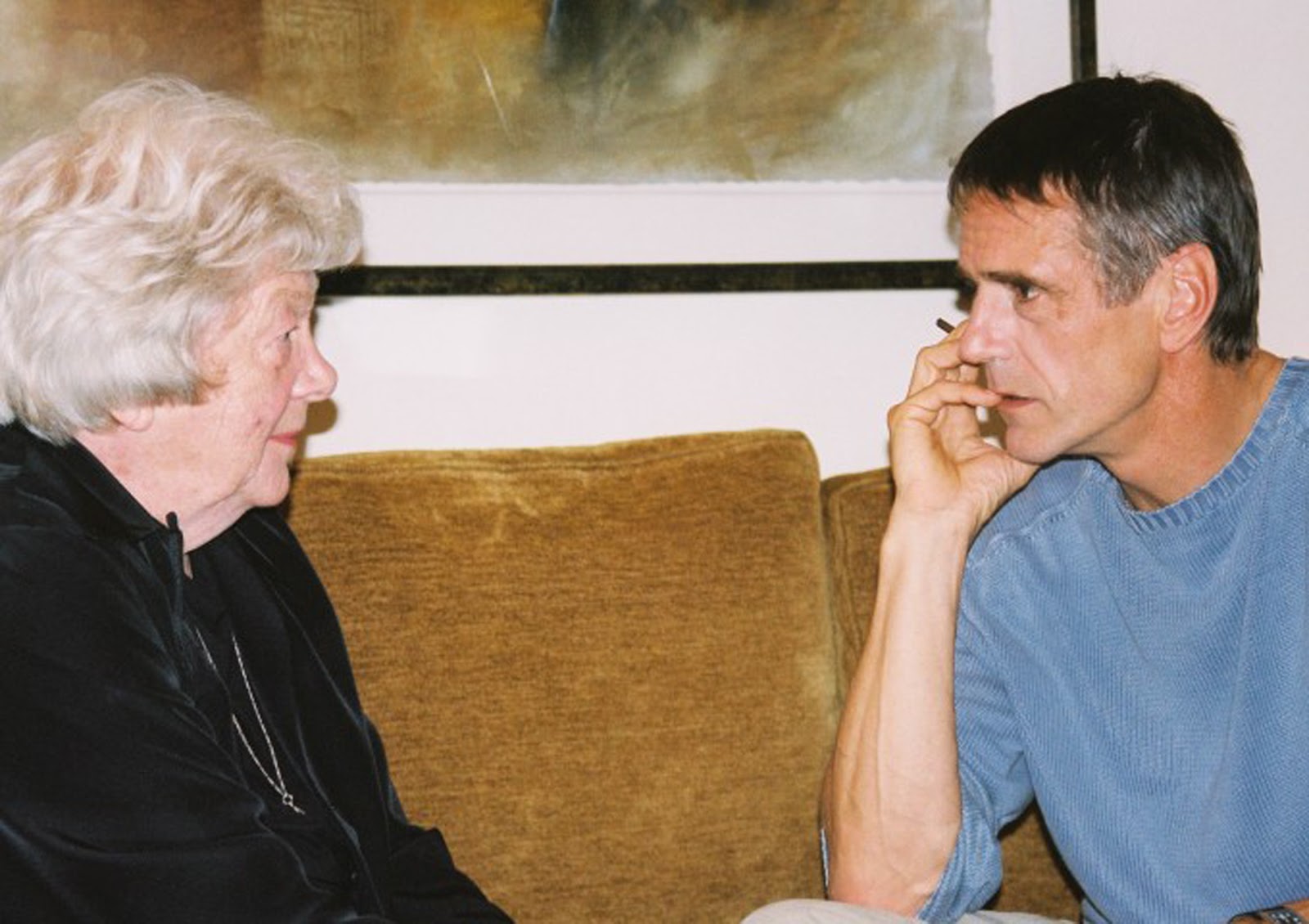
Sister Elaine MacInnes is a Catholic nun and a recognized Zen master. I have included a brief biography, a film, The Fires that Burn, done about her, and a link to her book on the miscellaneous koans. The picture of her with Jeremy Irons dates to her tenure as head of the Prison Phoenix Trust, which she founded to introduce meditation into the UK prison system. Now in her 80’s, she continues to work with prisoners in Canada through the not-for-profit Freeing the Human Spirit, which she founded.


not broken, what do catholicism, Zen, yoga & prisons have in common? A Profile of Sister Elaine MacInnes by Talya Rubin

The Fires that Burn explores the life and work of Sister Elaine MacInnes - professional musician, Roman Catholic nun, Zen master, and prison activist - and her unusual journey to greater understanding. The documentary retraces 80-year-old Sister Elaine's life path of spiritual redefinition and uncovers the journey from her harrowing days as a body shield and activist during the civil war in the Philippines to her present-day campaign to bring meditation teachers into prisons across Canada.

Flowing Bridge, Guidance on Beginning Zen Koans, By Elaine MacInnes. Elaine Roshi took some flak for writing about a koan practice that had been almost entirely an oral tradition, but I see it as her simply starting from the beginning.

Saturday, January 14, 2012

"Mindfulness is Not a Part-Time Job," a talk by Issan Dorsey

A Dharma talk given by Issan Dorsey Roshi
Originally posted on 1/13/2012

This transcript appeared in the newsletter of the Gay Buddhist Fellowship in January of 1995, four years and five months after his death from AIDS.


From Allen Ginsberg's collection


Someone said to me the other day, “Aren’t you always working on something?” Yes, we are always working on something, but hopefully it’s not up here in our heads, filled with words to obscure it. I was talking with a friend recently about the phrase, “coming to reside in your breath-mind,” and working with the phrase, and how useful it is to me. I thought it was interesting that I’d never really heard it before, and was just now beginning to work with it. I realized that I actually just heard it deeply.

This has been with me since I first started practicing. It’s a whole way of working with your mind—and I’ve been thinking a lot about it lately. I hope you won’t have to wait for 20 years before you begin to hear how to work with this thing called the mind in your zazen meditation.

Now, people who come to practice immediately sit much more easily than they did when I first began to sit at Sokoji Temple years ago. I remember everyone sitting with their legs bent up. They’d sit for five minutes, then they’d lie down and moan. But now people come, and it’s like we already did that part for them. It’s as if we have a shared body that has already gone through that preliminary stuff, and people are already able to experience some aspect of zazen practice and how we practice together.

We have to be willing to explore and experiment. First, we have to have a sense of humor and a willingness to explore and experiment with our lives and our discomfort. We know that sometimes we can sit for a few minutes, or even a few days, and at some point it gets pretty uncomfortable, and it’s uncomfortable for us not to invite our thoughts to tea, and reside in our breath-mind.

“Don’t invite your thoughts to tea” is an expression of Suzuki-roshi’s, which I’ve always found useful. You know these are just words, and we have to remember that every human concept is just delusion. Still, we use words and provisionally talk about our experience. Lately I have been exploring this way of thinking with a friend who has AIDS dementia; the virus is living in his brain. I’m thinking and working on it and talking with him about it because the virus that is attacking so many of us now ends up being in the brain. So is there some way for us to experience that? I don’t know yet. My question is: how to be with people who have dementia and how to experience the dementia that we all have anyway? It’s called delusion. Mind is always creating confusion, joy and pain, like and don’t like, and depression. But there is also a “background mind.” That is what my friend and I have been discussing.

Sometimes when I’m talking about uncomfortableness, I talk about the five fears. One of the five fears is the fear of unusual states of mind. How can we come to have appreciation and respect for this fear and not just some resistance, so that we can enter our fear, allowing these new areas of uncomfortableness? When we can enter each of these new spaces, we can begin to look at truthfulness.

Why do we have to sit? Really there’s no reason to sit. If we’re completely sincere, then there’s no reason to sit. I’m not completely sincere so I have to keep sitting to check. Even if we’re involved with unskillful actions, the one quality we should strive for is truthfulness. Truthfulness takes a total commitment to see all aspects of ourselves and our unskillfulness. If we can embrace the totality of ourselves, we can embrace the totality of others and of the world. Our tendency is to think about things before we do them. Even when we see a beautiful flower, we say, “Oh what a beautiful flower.” “Beautiful flower” is extra. Just look at the flower with no trace.

Suzuki-roshi wrote, “When we practice zazen, our mind is calm and quite simple. But usually our mind is very busy and complicated, and it is difficult to concentrate on what we are doing.” This is because when we act, we think, and this thinking leaves some trace. Our activity is shadowed by some preconceived idea. The traces and notions make our mind very complicated. When we do something with a simple, clear mind, we have no shadows, and our activity is strong and straightforward.

So, even with zazen practice, it gets so complicated. We’re dissecting every aspect of what’s going on, reviewing and comparing. How do we keep it simple and straightforward? How do we come to know this basic truth of practice and Buddhism? The teaching and the rules can and should change according to the situation and the people we’re practicing with, but the secret of practice cannot be changed. It’s always true.

We teach ourselves and encourage ourselves by creating this space, the meditation hall, so we can begin looking at our minds. “Don’t invite your thoughts to tea.” “Where is your breath-mind?” I used to say, allow this kind of mind to arise. But now I’m saying create background-mind.

This practice is simple: watch your breaths and don’t invite your thoughts to tea. But not inviting your thoughts to tea doesn’t mean to get rid of thinking. That is discrimination. So, there’s no reason to get rid of thoughts, but rather to have some blank, non-interfering relationship with them. Don’t make your mind go blank; rather, have a blank relationship with your thoughts. Begin to see the space behind and around the thoughts, and shift the seat of your identity out of your thoughts and come to reside in your breath-mind. We develop our intention to reside in our breath-mind by first bringing our intention to “breath as mind,” and then by shifting the seat of our identity from our thoughts to our breath.

This all ties in with how we use this space, this laboratory. We should have a willingness to explore with our lives, and this is our laboratory right here—how we use the meditation hall and how we use what happens outside of it. Mindfulness is not a part-time job.

If you want to see more about the life and teaching of this remarkable man, please visit my page: "The Record of Issan."

Wednesday, November 2, 2011

What is the "Real Work" of the Enneagram?

Originally posted November 1, 2011

Claudio Naranjo in Berkeley 1971-1976

I have been personally engaged in the study of the Enneagram since 1972, when I began four years of intense personal work in Claudio Naranjo’s SAT group. Until now, I have only spoken privately with friends about the proliferation of books, teachers, and controversy about the Enneagram. In all the hubbub, I hope that the real value of this work is not lost or diluted to the point that it becomes no more than an interesting curiosity.

This was the first of a series of articles about the Enneagram, its history and use, as well as its spread among the Jesuits. I created a database, an Enneagram Bibliography, using online resources as well as the recommendations of Enneagram students. I have included books, studies, DVDs, tapes, and other materials that primarily deal with the Enneagram as presented in the West, as well as materials from the Gurdjieff sources that contain information of interest to the Enneagram enthusiast.


One current myth about the Western transmission of the Enneagram goes something like this: in the early 1970s, Claudio Naranjo, fresh from his brief, incomplete training with Oscar Ichazo in Arica, Chile, began a somewhat tentative conversation with a select group of therapists and teachers in a Berkeley living room. He distributes crudely mimeographed nine-pointed figures to the experienced self-observers he has called together to flesh out the sketchy outline of personality characteristics that Ichazo had developed for each point. Then these highly trained psychologists and teachers set about connecting Claudio's and Ichazo’s fragmentary notes with well-documented psychological research and the best diagnostic tests.

As someone devoted to the study of ideas and how they shape culture, I love stories of discovery and invention. Some of the stories are obviously self-serving, while others have the ring of real experience. In either case, still filled with many assumptions, obvious and hidden, they are rich in information.

Sometimes it is very clear that the myth itself is part of the teaching method—for example, a great Japanese Zen Master copied a key koan collection the night before he secretly left China. His teaching emphasized the immediacy of Zen insight, diligence of practice, and the spontaneous breakthrough: stay up through the night and enter a new world before the sun lights your ordinary one.

In other cases, the myth supports the domination of one school over another. Elaine Pagels and others have shown convincingly that the Council of Constantine authorized only the Jesus Teachings that supported the authority of the bishop of Rome, rather than the Gnostic teachings that were equally prevalent in early Christianity. This move was so successful in suppressing an idiosyncratic teaching that we only knew about these sects from the polemical literature written to brand them as heretical until the remnants of a Gnostic library were discovered in the Egyptian desert in 1948.

I think that both these motivations can be found in the Enneagram myth: an early substantiation of the early link between Enneagram study and serious, scientific psychological investigation, and secondly, that the basic elements of Helen Palmer’s “authentic” narrative tradition come from the “Source” itself and were somehow misplaced.

I do not wish to sound mean-spirited, but this smells like either a carefully crafted version to promote Palmer’s teaching or, at best, her followers' oversimplified reading of history in the light of their experience and what they have been told about her oral teaching method and her sources in Naranjo’s work. Any myth, distortion, or fabrication that is in the public record or published materials is fair game. I would like to describe that seminal period from my own experience.

In the Fall of 1971, Claudio Nanranjo began to teach a small number of students in Berkeley. Starting with 25 to 30, SAT grew to more than 100 by 1975. He had recently returned from Arica, where he had been part of another group of 50 Americans, self-selected from the vanguard of people representing the new thinking centered at Esalen, California, the first Americans to work with Oscar Ichazo. Aside from Naranjo, John Lilly was the most prominent and the most steadfastly insistent on maintaining an independent stance.

I estimate that Naranjo spent more than two years connected to Ichazo and Arica, whether in preparation, traveling, conversations with Ichazo, participating in all the exercises in that first Arica Training as well as experiences where Ichazo directed him personally. (Claudio, for example, did live in a solitary retreat for 40 days in the Arican desert - his only contact with other humans was Ichazo driving out to see him every day). I will let Naranjo speak for himself about these experiences in his teaching and writing.

When I joined SAT in September of 1972, I found myself in a more ordinary group than the Arica pioneers from Esalen. We were relatively younger, spiritual idealists of the 60’s generation, liberated in our attitudes towards sex and drugs, deserted by the faiths of our collective fathers and mothers, holding strongly to the idea that spiritual practice could overcome the ills of society that was becoming increasingly materialistic and egocentric, aggressive and greedy. There were a few Ph.D.’s, several Ph.D. candidates, two priests, a Jesuit and a Franciscan, medical doctors, school teachers, a designer, several carpenters, a sprinkling of licensed therapists, but far more therapists in training. A good cross-section of ordinary, highly educated, college-town Berkeleyites.

We worked together at general meetings on Tuesday or Thursday evenings—these were shock points, times according to some Sufi tradition, when real change was possible. At other times during the week, we also broke into small group meetings. Most of us meditated for at least a half hour everyday, wrote in our journals, focused our work, our self-remembering, through directed exercises that were suggested, or “indicated,” by Claudio and delivered by either Rosalyn Schaffer or Kathy Speeth (who as a child sat in the lap of Mr. Gurdjieff and taught us the sacred dances, the “movements” of Gurdjieff).

Frequently on Saturdays and Sundays, Claudio sat on a tattered sofa in the large living room of an old fraternity house on Hearst Avenue while we sat on the floor. Claudio would begin saying, “Let’s do zazen,” and we sat in meditation for an hour. Then Claudio began to talk informally, exploring points on the Enneagram, asking questions, telling Sufi teaching stories about a character called Mullah Nasrudin, even stories about cats. (I can remember that Sunday very well because by the next Friday, I owned two stray cats). There were many references to G.I. Gurdjieff, the trickster; Claudio was very familiar with the work of Gurdjieff, though he never claimed that he had ever been trained or authorized by any of Gurdjieff’s successors.

It was always a lively conversation. Claudio drew on his expertise as Fritz Perls's foremost disciple and explored the conjunction of meditation and psychological practice. There was always psychological work. It was also creative and challenging; for example, as a classical pianist, he created meditation experiences with Beethoven symphonies.

One thing was clear to all of us: Claudio Naranjo was, during that period, an inspired teacher. Something of a momentous spiritual nature had happened to him in Arica, and we were present while he was unpacking that inspiration. We were part of a great experience, willing guinea pigs in a psychological spiritual experiment.

This first use of the Enneagram as a teaching tool for spiritual growth and inner work was not delivered on crudely mimeographed diagrams, although there were copies of Enneagrams that we used to make our own notes and observations. Claudio Naranjo developed and tested his work in real situations with a group of bright people who were dedicated to self-understanding and deep inner work. It felt more like a crucible than a study group. It was not merely the intellectual exercise portrayed in the literature that began to appear about 10 years after Claudio finished his initial work.

In the next post, I will try to probe the muddied origins of the Enneagram, looking for signs of its descent into psychobabble.

To review my Enneagram bibliography, please follow the link.

© Kenneth Ireland, 2011


Thursday, May 19, 2011

How I moved from Point 7 to 9

Mr. Gurdjeiff’s ‘chief characteristic’ and getting your type on the Enneagram.

Or how I went from Point 7 to 9.

Reading the memoirs of C.S. Nott, Teachings of Gurdjieff: A Pupil's Journal, I got a glimpse of what it might have been like to work with Mr. Gurdjieff in a way that’s somewhat similar to our current work with the Enneagram. Shortly after the liberation of Paris, amidst seemingly endless, exacting meal preparations, dinner toasts, music and piercing conversation in his Paris flat, Nott details G working with two young women, new students from England, who have to catch the night train to Dieppe and return to London. In a series of short, intense meetings with G, these students define their ‘chief characteristic’ in a precise way that they could use as they set out on the path of self-remembering. The urgency of discovery is sketched out in simple, direct language.

There is, however, no mention of the Enneagram, no evidence that G used the Enneagram to identify the ‘chief characteristic.’ I find it puzzling that if G did use the Enneagram in this way, we find no clear reference to it in the accounts of his early students. But what we do find is interesting: that the students were equipped with personal, precise, and exacting tools for self observation; that defining one’s chief characteristic was a process, a conversation with the teacher; and that it was something that the student him or herself did as part of their inner work.

Fast forward to late Spring 1975. I am in a large living room on the Arlington in Berkeley. Kathy Speeth has organized a series of nine evening presentations about the Enneagram for the “therapeutic” community. In attendance 15 or so therapists who are interested in the Enneagram but not members of Claudio’s SAT group. Among them is Helen Palmer, who has been hearing about the Enneagram from Claudio’s students in her own practice of psychic readings.

I remember those conversations quite clearly. They were a departure from the usual work of his SAT group. Kathy and Bob Ochs had asked me to be on a ‘panel’ of Seven’s, ego ‘Plan’ as both Ichazo and Naranjo referred to the point “Gluttony.” This was the first time several people of the same fixation spoke in front of a group and answered questions.

Claudio directed, laying a foundation with descriptions of the 9 points. In itself, this was not unusual, but his comments were definitely tailored for an audience of trained psychologists, and not the more conversational tone aimed at a student’s personal work that he normally used. The authentic tone of self-observation may have been present, but I felt that the obligation of explanation (perhaps performance) distorted the feeling of each point.

In my previous work in SAT, senior students were most involved in what we called proto-typing. In my case, Bob Ochs, the Jesuit priest among Claudio’s original students, was my primary source for helping me determine my fixation. Ochs had organized a study group in Chicago shortly after he joined Claudio’s group, and the following Fall, he offered a course on the Enneagram at the Jesuit School of Theology in Berkeley, where I was a student. He followed the usual academic format—14 weeks of lectures plus additional work—but his presentations and assignments were not the usual seminary fare. By Christmas of that first year, most members of Ochs’ class were typed. He said I was a seven, a ‘classic’ seven, a sexual seven, which became the point I worked with for my entire time in SAT.

And so, at the invitation of Kathy and Bob, I shared my understanding of ‘Plan’ during those first panels. At one point, Claudio turned to me and asked: “Are you sure you’re a 7?” “Of course,” I said with a laugh. Claudio said, “Ah, there it is. Listen to that laugh. Ken really believes that everything will turn out. That is a clear sign of point 7—the conviction that everything is OK.”

Fast forward again, this time 25 years. It is 1996, and I am taking care of Bob Hoffman, who is dying of cancer. Claudio, back in Berkeley after teaching in Spain, visits often. One morning as he is leaving, he turns to me and asks, “Did I type you a 7?” “Yes, you did,” I answered with certainty. (Didn’t he remember?) “I must have been crazy,” Claudio laughs. “You are a 9. No 7 has your earthy sense of humor. If you look for ways to take care of yourself, I think that you will discover a rich vein.”

Of course, I knew point 9, and I knew in an instant that Claudio had nailed me. I had been in the conversation too long not to recognize the truth. The 9 is blinded by forgetfulness of self. I was sick and upset for a full week before that split second’s observation, saying goodbye and opening a door to a world that fit me exactly. (I have never seen convincing evidence that any of the Enneagram tests are reliable, but I am convinced that physiological reactions are strong indicators that you have really understood yourself on the Enneagram. Trust yourself, all of yourself, even when you don’t quite feel like yourself.)

So, why am I telling this story? Certainly not to discredit Claudio or his teaching methods or what might appear to be an oversight. My five years with him changed the direction of my life. I love life—before I only pretended to love it. Is this a confession of my own slowness to learn and understand? I hope not. I certainly do not feel that I wasted 25 years thinking that I was a 7. Is it to discredit the understanding of any particular teacher or school? That is not my intention, but I might try to issue a gentle warning not to give yourself over completely to any teacher, in any circumstance—even if they are Jesuits.

Discerning your point on the Enneagram may be instantaneous or it may take years. Certainly don’t be disheartened if you leave your first weekend with no clear idea of your fixation. It is really OK not to know, to be hesitant, or even to change your mind as your understanding and your experience of self deepens.

Or to ask the question in another way: is it also OK to live your life on the assumption that you are not the person you thought, or have been told, you are? Of course. That’s the way that most people live, and they may or may not suffer. Of course, my choice would be to live life as honestly and authentically as possible. But it’s also my experience that even when I’ve been blessed with a bright flash of an extraordinary insight, real changes have appeared incrementally, slowly, and even painfully.

As our own understanding increases, we contribute to everyone’s understanding. Any powerful, genuine insight into the mind’s inner workings takes time to sort itself out and make itself useful. Exaggerations, missteps, and, unfortunately, misuse of the Teaching hurt people rather than liberate them, but conversation and debate are always a healthy antidote if intentions are not self-serving.

There is I think a real lesson in the sense of urgency presented in the story about G’s young women students working to discover their Chief Characteristic in his Paris flat. Especially for me, a 9, it is a task to learn introspection without a lot of plodding and fussing. The ride through Paris to the Gare du Nord is, in fact, really wonderful. On the other hand, tripping out about an imaginary trip to Paris is a waste of time.


Notes on further reading.

Among the many wonderful accounts of Gurdjieff’s teaching, Nott’s is only one. In my view, reading Claudio Naranjo is essential for any student of the Enneagram. I have also written at more length about my own experience with Claudio and the early SAT group on my blog “All and Everything Enneagram.” Please leave any comments, questions, and observations you want.