Monday, January 29, 2024

How a blind monk might respond to my piece

After reading my last post “It is Universal" Doug McFerran posed some great questions about the language of "Enlightenment.” He closed by saying, “What I would really like to hear is how a blind monk would respond to your piece.”

I would too. His name was Zenshin Philip Whalen (October 20, 1923 – June 26, 2002). He gave me lay ordination 33 years ago. I lived and sat with him in the zendo at Hartford Street for more than 6 years. Though I loved Issan and learned from living with him as he was dying, I was formally Phil’s student. Phil was the Beat poet who was known as the poets’ poet. He read at the Six Gallery the same night that Ginsberg read Howl. He was obviously upstaged. 


Phil was legally blind when I met him. He had figured out how to get around. As with other blind people I’ve known, his sense of hearing and touch had recalibrated to some degree to make up for his loss of sight. He could go up and down the stairs to the zendo and find his seat and bowing mat. He loved to eat so he certainly could locate food on the table and in the refrigerator, though he often needed help. Vague shadows were the only information that his eyes delivered. He had glaucoma which had been misdiagnosed 20 years earlier. Being perpetually broke, I imagine that he’d gone to the cut rate optometrist who had dropped out of medical school but hung out a shingle in the Tenderloin. 


I assume that Phil had a photographic memory. If I asked a question while we were sitting in his library office, he would say, “Check out old Yampolsky, page 54, third paragraph from the top of the page. You’ll find the book in the middle cabinet, third shelf, about three in from the right.” And god dammit, it would be there. He was the most well read man I have ever met. He loved books and words. He could quote pages and pages of poetry. People were always a challenge for Phil, but he tried his level best. I suppose that I had as close a relationship with him as he had with anyone, and I learned an enormous amount, but we both had to work at it.


When I write about Buddhism and search for an appropriate English word, I often ask my memory what Phil might say. This is not reliable, and perhaps as hopeless as consulting a fake optometrist so I exercise caution. Phil distrusted Plato and would always hedge his use of any philosophical language with words of caution. When it came to Buddhist terminology in English, he would usually begin with the technical Japanese word from the Soto dictionary, then he would foray into the antecedents in Ch’an, or Chinese Zen, and then finally refer to the Sanskrit terms that were developed by the early Mahayanists. 


So yes, enlightenment is just the normal way that Western Buddhists have described the the experience of Kenshō (見性), a Japanese term from the Zen tradition. Ken means "seeing", shō means "nature, essence". It is usually translated as "seeing one's (true) nature", that is, the Buddha-nature or nature of mind. Kenshō is an initial insight or awakening, not full Buddhahood. Then Phil would have directed me to the Heart Sutra, the Prajñāpāramitāhṛdaya where the Bodhisattva Avalokiteśvara  directs Śariputra,one of the Buddha’s disciples to examine form and emptiness, and then tells him that there are no eyes, no ears, no nose, no tongue, no body, no mind, etc. We are off into.an examination of emptiness (śūnyatā): all phenomena, known through the five aggregates of human existence (skandhas): form (rūpa), feeling (vedanā), volitions (saṅkhāra), perceptions (saṃjñā), and consciousness (vijñāna) are empty. Bad translations and advanced philosophical study aside, in Zen temples, the 100 line version of the Heart Sutra is usually chanted, sometimes in phonetic Sinojapanese, after a meditation period. 


When I finished the last piece. “It’s Universal,” I asked myself what was missing. I had tried to lay out some of the areas and things that might be perceived differently when we have some experience of kensho, or enlightenment, but that is not a definition. Then my mind went in several directions. First I remembered the many times I had a complaint about sitting and not getting something. Phil would most often get to be the strict Zen teacher. He’d say, “You’re not sitting enough.” Or if we were sitting in his library he would say look at what old Dogen says in his Shōbōgenzō: “You should therefore cease from practice based on intellectual understanding, pursuing words and following after speech, and learn the backward step that turns your light inward to illuminate yourself. Body and mind will drop away of themselves, and your original face will manifest itself. If you wish to attain suchness, you should practice suchness without delay.”


Rather than try to parse 12th century practice instructions from the monk’s hall, I will tell an old Irish joke that illuminates old Dogen. A hapless American tourist is lost in Dublin. He is looking for the Cathedral and just can’t find it. He sees a pub. Surely these guys will be able to give some direction. He stands at the end of the bar and asks “How do you get to Saint Patrick’s? The answer comes back, “You can’t get there from here.”


So we are looking for some experience in meditation. That is all the Zen means--Meditation Buddhism, but that language won’t sell soap, body oil or relaxing massage.


My friend Rob Lee lived at the Page Street Zen Center for many years. The zendo is in the basement. There are windows on the Laguna Street and Lily Alley sides and from some of the seats in the zendo, a clear view of what used to be pre Loma Prieta Earthquake the Fell Street Off Ramp. When a newcomer came for meditation instruction in the late afternoon, some bad bad zen students who were instructing them would sit them in one of those seats. At just about 5:30 cars coming off the freeway unto Fell would catch the last bit of sun disappearing over the hill and it would reflect off the windscreen. The new meditator was treated to a flash of enlightenment the first time they sat on the cushion.


Language about the experience of meditation also plays tricks. 


I will end with a memory of that Blind Monk. One morning coming up from the zendo, Phil got to the top of the stairs and a bird started chirping in the backyard. He sang out, 


The year's at the spring

And day's at the morn;

Morning's at seven;

The hill-side's dew-pearled;

The lark's on the wing;

The snail's on the thorn:

God's in his heaven—

All's right with the world!


Saturday, January 27, 2024

It IS Universal

Some rumblings from my Bangkok hermitage.

27 January 2024.


This is not an argument for the thesis that there is a universal creed under all the vagaries of the religious expressions of humankind. That's an old theosophical trope. I refuse to engage its tired argument or bask in its self-justifying cliches, though I’d like to make a joke if I could. I always hope that the right words will coalesce at an opportune moment, but my jokes are usually lame. Regardless, all day yesterday and this morning, I have been tossing around telltale fragments from three conversations that have cleared the horizon of my recent thinking.


The first thread of this conversation is Joan Didion, a woman writer whose creativity, imagination, and skill we have rarely seen on our American continent. I was watching a documentary about her on Netflix. She said that in the 50’s when she got her first job out of college and moved to New York from California to take the coveted position as a staff writer at Vogue, she could easily identify the women executives who made the decisions at the magazine. They all wore hats and gloves. The “girls” who did the work, the staff writers, secretaries, stylists, copy editors, and mailroom clerks, did not wear hats except when the weather dictated. Having just researched Saint Charles Borromeo for another piece, and seen his gold mitre and stole, I thought there might be a universal dress code embedded in human nature: you know who’s in charge by their hats.


The second thread of conversation has to do with the theological term transubstantiation. Perhaps it has been elevated to the level of doctrine, but it’s certainly not a term that would even have been recognized among early Christian believers, not even the Grecophile Paul. My twisted mind flashed to Og Mandino’s characterization of Paul as “The Greatest Salesman in the World,” without whom, according to the Think and Grow Rich crowd, the gospel would have languished in the backwaters of Judea. But I think that the credit has been misappropriated: the honor belongs to Aristotle who, mixed in with a few Neo-Platonists, really deserves credit for promoting the Jesus sayings, stories and beliefs in the predominant culture. A simple test proves my point. Would you say that in the seminary curriculum post Reformation and certainly in the Jesuit Ratio, was Thomistic theology given equal weight with textual study of the gospel texts? Clearly more. We learned more, or spent more time studying Aristotle's notion of substance than we did about the possible early forms of liturgy. This is a snapshot of Aristotle’s chokehold on our thinking, locking in definite notions about the nature of God, the divine characteristics of the Lord Jesus as Son of God as well as the continued presence of the Lord in our midst. Q.E.D Maybe Jesus and Aristotle deserve equal doses, but actually, Aristotle gets the upper hand because he allowed for science and logic to sneak in the backdoor..


And the third strand of this thread comes from a conversation that I had with my Zen teacher Ed Oberholtzer a few weeks ago. He said that he felt that our thinking about theological matters is hedged in by imagined people, places, times and events. We think that without the Lord Buddha sneaking out of his father’s castle on or about 563 B.C.E., we would not have the possibility of being enlightened. Then he said it is entirely possible, even probable that some group besides Buddhists would hit on the right conditions to produce that insight that is liberating, “maybe even that group of former Jesuits you talk about.” It is probable that this insight is reproducible, and given the realm of human possibilities, that it has already been replicated. We just haven’t heard about it. Do I nominate Bob Kaiser, Bob Brophy, Pope Francis, or Marko Ivan Rupnik for Zen Master?


Bad jokes aside, where does this lead and what are the conditions that make this experience of enlightenment or liberation possible?


The first condition has to do with those hats. It’s not that an examination of past decisions is not interesting, important or even valuable to our exploration, but let’s not be distracted by fancy hats. They are just culturally conditioned fashion. The colorful signs of power were among the first things that the Reformers cut when their movement gained traction about 500 years ago, but it was not too long before a new style was in vogue and captured the imagination of the people they wanted to win over. So in any case beware hats. Don’t hesitate to wear a rainhat in monsoon or a toque when your ears might freeze. And give the drag queens a lot of leeway. They keep us honest, but recognize that the texts that made it to the inked pages were put there by the women who wore the hats.


The second condition has to do with the limitations of human thinking. It’s always difficult to thread the needle isn’t it? It’s more difficult when you’re wearing a straight jacket but think it’s a Roman toga. So much of what I currently “think about thinking” or even “non-thinking” has to do with my work with the concepts derived from the Nagarjuna School of Buddhism that I feel a bit tongue tied. I often think that I don’t have enough time left to fully appreciate the contribution that this revolutionary thinker made in the development of the Mahayana, and that makes me feel like I’m probably missing something important. Still the lessons that I’ve learned by trying to understand the thinking of the Mahayanist, and especially the Zen guys I spend most of my time with, changed my life. I did the most difficult training, the one that I undertook in a rigorous way that young people usually do when they first start to ask the hard questions about life in a system that pretended to be open when in reality it was designed to answer objections rather than explore. That in itself allowed me to see its limitations. Following a line of thought is just that. It doesn’t lead to the discovery of truth with the big “T.” 


I also really appreciate that this use of the brain is groupthink, and I don’t mean the usual negative connotation of the phrase, but rather thinking together in a group of men and women to really get it. This makes me appreciate the many parts of managing an open conversation with lots of people contributing.


And the third condition is the one that Ed alluded to. It was in the context of some koan work that we've been doing for several years, but his point was that even if all the great Masters of the non-dual way were extinguished and their writings disappeared, it would not be forever before some other humans discovered this unique and powerful way of looking at our world, ourselves, and our interactions. Although not immediately recognized or available, It is not divinely revealed, and its discovery is not confined to a particular time and place. Given that there are hundreds, perhaps even thousands of men and women, possibly including some Jesuits, who have demonstrated that they are themselves Buddhas, well you get my point. 


The joy and promise of this fact about Buddhism is often hidden or disguised. It is very hopeful. The implications of it are revolutionary: we only have this moment and this place in these particular circumstances to work with which is why the day that I have fretted over writing this and making it sound rational and cogent and persuasive might have been a waste of time, but I had some fun which is not a forbidden pleasure,


Friday, January 19, 2024

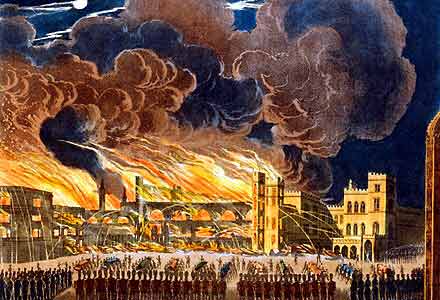
Will the Palace of Westminster go up in flames?

Bangkok, Thailand

March 30th 2023


Will the Palace of Westminster go the way of Notre Dame, and post Brexit, will there be a way to pay for its rebuilding? 


There is a ton of evidence of the danger and appropriate concern for the dire situation. Fires and plans, debates and more plans and politics. Ah, yes how could the home and symbol of the British Parliamentary system be destroyed without a lot of very civil shouting? There was an attempt to sift out the political warfare and get on with rebuilding, The oversight committee released An Independent Options Appraisal Report (8 September 2014) detailing the projected costs, timetables and other pertinent materials. That was almost 10 years ago. But the Tories have been in charge and Brexit took the wind out of the political sails as well as money out of the coffers. The projected cost was far too much for the likes of Boris Johnson and Jacob Rees-Mogg, and Rees-Mogg could hardly do without the proper backdrop for his mumbled theatrics.


So they decided to throw the entire deliberation back into play. A political football. When I heard that the clown Rees-Mogg was involved, I knew that all sanity had been thrown to the wind in a plethora of incomprehensible high brow language and a penury of common sense. Let’s hope that they can get the project underway before something far more destructive than the fire of 1834 brings Westminster down once again. We know that post-Brexit there will be no money to replace the building. Rees will have to hold forth in a thrown-up Parliament of concrete blocks.


The Great Fire of 1834


Thursday, January 4, 2024

Big Changes for Jesuit Spirituality

Newsflash! Pope announces changes to the Spiritual Exercises

13 March 2024


Pope Francis will hold a joint press conference with Arturo Marcelino Sosa Abascal SJ, the Father General of the Society of Jesus to announce the first major revision of the Spiritual Exercises of Saint Ignatius in 500 years. This follows the discovery of a document found in Saint Ignatius’s desk with instructions not to open until the tenth year of the reign of the first Jesuit Pope. 


The Jesuit Curia has released a translation of the text of Saint Ignatius's letter.


Rome, January 4, 1556


As I near the end of my life, I pray (and worry) constantly about the future of our Company. Although it seems to be thriving, supplying extremely well-trained priests to stem the tide of the reform movement and missionaries around the globe, something haunts me. The vision that I had by the River Cardoner is fading. I have been particularly troubled by the prospect of losing that vision after I die.


The administration of the Society will not suffer, there are plenty of talented men, but I fear our collective understanding of God’s will is more than slightly cloudy. .I am worried for the visionaries. Our men are certainly a cut above regular priests. We have a lot of second sons of high ranking families, bright kids, eager, many are extremely devout, but it is almost that they do everything too perfectly. The gay ones have to hide out because there are so many trying to prove themselves. Damn macho post medieval tribal culture is deadly.


Then I had an experience with a young applicant to the Society, a mestizo who came back with some missionaries from the Americas. He can neither read nor write, and his Latin is rudimentary so I had to have him work in the kitchen while he catches up, but he claimed to have had a vision of the Blessed Mother that directed him. He started to talk to me about it, and I was very moved. I have weighed the spirits carefully and it is clear to me that Mariano had an authentic vision.


Mariano says that the Virgin told him that we Jesuits place too much emphasis on earning God’s Love. I blame myself for the emphasis on love through actions and not in our hearts. (Love is expressed through actions, but it has to do with intent). He says that the Virgin told him that priests who are privileged and jealous of their position become blind to the immediacy of God’s love and can’t see that this love comes without any conditions. He’s absolutely right, but centuries of fighting have conditioned us to enforce conditions rather than seeing beyond them.


I would turn our enterprise over to Mariano if I could. I know that this is God’s will, but I can’t execute it. The Inquisition would go ballistic. The Pope’s funding scheme for Saint Peter’s would collapse. The Society would split apart with the infighting. Sometimes I am tempted to just let the cards fall where they may, those snobby Jesuits who spend years studying the minute distinctions in the writings of Avicenna and Aquinas need to do more quiet meditation, but I will have to leave that aside. I have decided to send Mariano into hiding,


This is where I am being led right now. I have to get this young man to safety and protect his vision. The time will be ripe at some point, but not at this moment. Until then we must protect this inspiration. The fires of the Inquisition need to be extinguished, and warring factions need to at least reach a detente. The church does need reform and a strong hand is necessary right now so fight fire with fire, but make sure that the proposition of “ends justify means” is discussed in the ratio. Keep an open mind. Things change.


I have authorized the foundation of a clandestine cell of Jesuits near Buenos Aires in the New World. Mariano will lead this small community. Their practice will be kept alive by recruits from the indigenous community that they will serve for as long as it takes. I want to keep the flame alive while things sort themselves out. Mariano has told me that the Virgin told him that Jesuits will begin to practice the quiet meditation that Xavier wrote about from Japan, and she approves. I find that perhaps the hardest thing to believe of all the wonders he shared with me, but I suppose it is possible.


Mariano has my permission to restructure the Spiritual Exercises. I will note them here so that anyone who reads this will know that I approve of the changes. He has turned them on their head. The first week will be the Contemplatio ad Amorem. The main meditation instruction will be the fourth method, to follow the breath as it rides on the sound of a word in prayer. Mariano says that human beings can find God in all things instinctively. He is right. In my version of the Exercises I thought I had to lead the retreatant by the nose. We don’t need to go through hell to experience the Presence in rocks and stones, mothers and babies, even in the clanging of pots and pans.


This experience will be the basis of the meditations on the events and sayings in the life of our Lord Jesus Christ during the second week which will stand as they are with the exclusion of the stories about Mary. The third week also remains as it is, but without my interpretation. We can approach the meditation on His sacrifice and death and allow them to speak for themselves, and create their own inner narrative. But again the story of Mary going to the tomb will be left for the entirely new fourth week.. 


The new fourth week is a series of meditations which Mariano received in his vision of the Blessed Virgin. She was the person who really allowed God to become human. I hope we don't have to wait 500 years to experience how Mary the Virgin can help guide us to continue the Incarnation, but 500 years is just a drop in the bucket of eternity. We can all begin to experience immediacy right now in the moment. We don’t have to wait. Waiting for the present moment is an oxymoron. However the changes in my Exercises will have to wait.


Mariano tells me that in the clandestine Buenos Aires cell, washing dishes will be part of everyone's daily practice. It should smooth out the rough edges between Avicenna and Aquinas. There may be random occurrences in the universe, but few mistakes.


Father Ignatius