Search This Blog

Thursday, August 17, 2023

Reforming the Roman Curia is like trying to teach an elephant ballet

Reforming the Roman Curia may be harder than teaching an elephant ballet, 

Or why I love my ex.

According to Canon Law, I am an ex-Jesuit. In 1975, after almost 10 years in the Jesuits, I formally asked to be released from religious vows. Someone in an office in Rome eventually read my appeal and granted my request. I went into the office of my religious superior, a man I didn’t know well. We both knew we were gay but our chosen paths were so different that there was immediate animosity. After some awkward conversation, he and I put our signatures at the bottom of two papers. Both my promises to God in the context of the Constitutions of the Society of Jesus and their legal and moral obligations towards me were rescinded. No money was exchanged. It took about 10 minutes. The whole process, however, from my exclaustration and the 19th Annotation retreat that my director asked me to undertake, through to the point that I mustered the courage to make a clear decision took more than a year.

Today I’m glad that I followed this formal path. In retrospect it might have been simpler just to walk out the door and not look back. It was not easy. It was emotional and gut wrenching. Eventually I came to discard other traditional religious trappings, fully severing my ties to the Catholic Church. I rejected some beliefs outright, for example the "intrinsically disordered nature" of same sex orientation, while others I quietly set aside, but in the end like a married couple who achieve an amicable separation, our divorce was clean. I cherish the years that I was a Jesuit. There is no resentment. Thankfully, I still maintain a deep affection for my ex although we live very separate lives.

I entered the Jesuits less than a year after Paul VI closed the Second Vatican Council. Hopes were high. Most young Jesuits at the time were buoyed by the promise that the Church would shed its medieval trappings and present the Gospel to a world in need. But particularly with the election of John Paul II, the retrenchment within the hierarchy stifled my enthusiasm. Choked might be more accurate. Ratzinger shared Wojtyła’s conviction that Vatican 2 was a radical departure from tradition, too radical. Although they both had to admit that the Council was the work of the Holy Spirit--it was after all a church council--under the guise of not throwing the baby out with the bathwater, they reigned in the spirit of reform. Hardliners sifted through the documents to see which ones they had to live with. They drew a line in the sand with regards to Liberation Theology for example, and began to carve out exemptions for the Tridentine Mass. Benedict even dusted off the Papal throne and took the red slippers out of the closet. 

From my outsider position I saw a recalcitrant Curia unwilling to give up power, money and control, but after almost five decades of trying to bolster up a crumbling European style monarchy on life support, it became clear the form of government was so antiquated and corrupt that it would be wiped away unless real reform was given a chance. Enter the first Pope from the New World and the first Jesuit Pope. He has had a formidable task given the landmines that centuries of absolute rule have left planted to defend itself from all criticism. 

An ex-Jesuit friend commented on the current state of the leadership of Francis, including the backlash that began to surface the moment he paid his own hotel bill after being elected. “Dragging along the Curia, the Bishops, and all the ‘people of God’ will take many years.” Dragging is not usually a word associated with “metanoia,” conversion or change of heart, one of the favored words in post Vatican 2 theology, but for me points to the heart of the matter.


Reforming the Curia is like teaching an elephant ballet. Patient training may yield some behavior modification but it won’t be dancing. It’s also extremely difficult. The elephant will demand more treats to learn the act. Or more harsh discipline, or coercion. In human terms that usually means money and power. Deprive the beast and you might cause a deadly rampage. That is what the likes of the gay Australian Cardinal and Benedict’s Platonic boyfriend seemed to be threatening. Time to get back to that old time religion where the elephants perform as they were trained, the people applaud and hand over cash--or else.

A few days ago a fellow Buddhist, a gay Californian who is also here in Asia right now with his husband said to me with regard to the American political scene, “Where are the new leaders? Where are the JFK’s or the MLK”s? It seems that we are only seeing reactionary people seeking the limelight and a few others standing up to them, brilliantly and strongly, but no one is actually inspiring a generation with the same power as “Ask not what your country can do for you, but what you can do for your country?” Surveying the official face of the Roman Church until Francis, I say the same thing.


I see Francis limping along in full view, looking tired but not giving in, listening, speaking carefully and then going home to cafeteria meals in a communal residence. Sure he’s pope. The food is good and the health care top notch, but gone are the high flying days of fancy Kielbasa cooked in a palace by an adoring staff for a table of favored quests on a closely held list. Francis may have the kind of leadership required, generous and humble but he's not really cut out for elephant training. The circus will look entirely different. The results may also take many years. Rome wasn’t built in a day and it will take more than a day to rebuild, if we can keep the dancing elephants calm. 


I am and will continue to be an outsider. I may have given up my right to vote, but I can still love and support Francis and what he stands for. I am not alone. I will continue to express my views as clearly and forcefully as I can. It is the right thing to do. 


Monday, August 14, 2023

My Brush with Hollywood Stardom

This is of course a massive exaggeration. I had been visiting in Silver Lake with my friend Jack Pelton but he had to go to Portland to be with his nephew who was undergoing a very painful surgery for a young man, and there I was. Jack’s company rented revolving stages for movie shoots, and he’d sold one to a production outfit at Universal Studios where I had my encounter with the incredibly huge and expensive technical side of the film industry. It was my entrance to a real Hollywood sound stage.

Let me backup a minute. It had to be sometime in 1993. Michael Jackson had just been publicly accused of having sexual relations with underaged boys. Overnight he’d become poison, but he was also a huge star. Francis Ford Coppola’s 3D Imax movie, Dr. EO had been playing to full houses in Disney’s Epcot Center for almost a decade. A massive hit and huge money maker. But what to do when rumors and fierce public opinion emerged, and you have a sex offender of the most heinous sort cavorting in iMax 3D making no bones about wiggling his pelvis? You rush out a replacement as fast as you can.


Enter “Honey, I Shrunk the Kids,” or honey I blew up the kids. There were two versions. Sure to be another fantastic hit though I find the whole premise macabre--a nutty professor is working on a wonky machine in his attic and accidentally shrinks his kids to a miniscule size where ants prey on them in the front lawn, and rats accidentally fed into a copy machine chase them till everybody is scared shitless. In real life the wonky film technology has been perfected to make ants and rats jump off the screen and scare the be-Jesus out of ordinary middleclass white Americans venturing out of suburbia for a day of relaxation and adventure in the wholesome way Walt promised. It’s Hollywood so what the hell. We are all about avoiding any real conversation about child abuse so confront the topic head on, shrink and torture a few cute white kids due to the half-brained idiocy of one of their parents. Makes perfect sense, and I get a gig working the shoot.


The call was 6:30 AM. I had to stop and get something for the revolving stage, I think it was a full set of new Phillips Head screwdrivers so that Jack’s computer guy could fix whatever crisis came his way and keep the producers happy. I set out for Baller Hardware which opened at 5 A.M.. A good omen for the day--rushing to the tool section, I literally almost bump into Martina Navratilova in Fasteners. Forgetting the unwritten rule to avoid making a big deal about running into one of your favorite gay celebrities equipping herself for a day of DIY at her Hollywood mansion at five thirty in the morning, I smile broadly and wave hi. She waves back with an equally bright smile. This is Hollywood, real star encounters, and she is as wonderful in real life as I imagined.


I get to the Universal lot, find parking and make the call. Now this is going to take a bit more explanation, Jack has pulled some strings and I am actually going to make a few hundred dollars that day. I will be tending rats. Really. I will be a Rat Wrangler. In Hollywood lingo a “wrangler" is the person who tends to animals on the set. In rodeos the wrangler coaxed bulls into the pen before the cowboy or cowgirl rode them bareback till they were thrown off. On a movie set they kept the horses calm until the Lone Ranger and Tonto needed to ride off into the sunset or gallop to a gun fight. Hollywood code stipulates that there can be no more than 5 animals per wrangler. So for the scene that we were filming, a hundred or so rats exploding out of the copy machine, there were about 20 wranglers sitting on hard folding chairs, each tending five white rats in cages until the director said lights, action, release the rats.


This took a while. Rats, even clean and groomed Hollywood rats do not respond well to commands. I think it was 12 hours for them to cleanly fall out of the carefully engineered copy machine with some clear plastic tubes against the blue background which would accommodate some kids who are confused and scared shitless. I don’t remember much. I wish I’d brought a book but alas there was no book section at Smart and Final Hardware. No talking allowed, but the catered food for the crew was fabulous. I mean really spectacular. No greasy food truck. Bagels and lox till 9, sandwiches and salad for lunch and a full course dinner. The pay was more than I made for any day in that whole decade. I think close to 40 bucks an hour for sitting with a small metal cage at my side. My only real complaint was the fold up metal chair.


When Michael died in 2009, Disney returned a remastered Dr. EO to the screens at Epcot. Better to cash in for big bucks. The attention span for accusations of sex abuse is about 10 years so he’d served his time. Time to rid the world of fanciful child abuse by shrinking kids for white rats to threaten them.


I found a short clip of my day's work on YouTube. https://youtu.be/rRdzBtE2mQU, The bit with the white rats and copy machine starts at 2:30. One full day for a split second. That's Hollywood.

Friday, August 11, 2023

A note on karma, story telling, the movie “Oppenheimer” and the opera "Doctor Atomic."

When I examine my conscience, I ask myself not just what I did, but how bad the consequences of my negative actions were? Sometimes the immediate results are right there: a shattered relationship, a broken dish. I am not aware of any personal actions that have the possible consequences of splitting the atom, but if I were to examine the conscience of the Manhattan Project, how bad were the results, including the ones that became obvious only after Little Boy and Fat Man obliterated two cities? Worse, much worse than we could have possibly imagined.

We are sitting in a theater 68 years after the fact. Although Christopher Nolan begins Oppenheimer’s story much earlier than those eventful days, telling a story backwards is always difficult. From the storyteller's point of view, looking in the rearview mirror, he or she can see how things played out in ways no one could have imagined. But where is it in his or her job description that writers have to be omniscient? And to be honest about telling the story as it happened, how much of what we’ve learned after the fact can be scripted into the narrative before it becomes nothing more than a moralistic fable meant to instruct about the consequences of bad decisions?

There is a role for telling stories of good versus evil. God knows there are more than enough of them to claim our attention and compete for our vote. One of the problems in trying to focus humanity on taking the right steps in combating climate change is that alarmist tales where the payoffs still give cash and prizes hinder accurate telling. How can we possibly disconnect from burning fossil fuels when our lives and livelihoods will be disrupted? It is a situation that can only be solved when the threat to humankind’s survival is an in-your-face life-or-death situation, or at least that is how it is portrayed in the accompanying storyline. Humankind will take no action until we survey the wreckage, but then, like Hiroshima, it may be too late.

The men, and they were all men, who made the decisions that led to humanity’s total dependence on burning fossil fuels to foster the industrial revolution, followed the time-honored rules of self-enrichment; they just grabbed what was at hand and sold it for a profit. Did they see the ice sheet of Antarctica melting and the water in Florida becoming as hot as the hot tub in a beachfront condo? The answer is clearly no, they did not. They could not. Do Germans who bought into Hitler’s Third Reich after the economic disaster of the Weimar Republic share blame for the Holocaust? They claim that they are really decent people motivated by giving a new strong leader the chance of improving a defeated Germany’s economic condition and lost status in the world. The murder of millions was unforeseen. They claim ignorance, and to some degree, they are right. The horror of the camps was not broadcast. Did Oppenheimer and the other Los Alamos scientists foresee the insidious arms race that would stoke the economy for generations, as well as the lethal consequences of unleashing the power of nuclear fission and fusion? Obviously, they could not, or at least not in the way that it appears to us now. They were attempting something that they did not know could be done. It had never been done before. We have the wisdom of hindsight. Looking back, researching carefully, we might find evidence that was overlooked, neglected, or even willfully hidden because it would have stopped the development of the weapon that military planners pinned their hopes on. In the Manhattan Project, there is evidence of fear in the hearts of some scientists that humankind was stepping into the unknown and that the powers about to be unleashed were of a scale that had never been seen in the history of the world, but these were suppressed by the chain of command.

In each of these imagined scenarios, the protagonists could be straw men in a tale of right and wrong with far-reaching consequences. But in storytelling, describing the reality of the moment when the event actually happened is very difficult and easy to botch with a lot of judgment and well-intentioned afterthoughts. I will not argue that this lets us off the hook, but I will point out that if the narrator or writer or singer does not capture that immediacy, they have failed.

The storytelling in “Oppenheimer” was masterful. I have some familiarity with the subject so in a sense it was a retelling for me. If I were the writer, there were a few details that I might have outlined more clearly, especially the role of Lewis Strauss in the post war campaign to destroy Oppenheimer’s reputation when he became an advocate against the disastrous arms race that has left the world with the ever present threat of mutual mass destruction, but I can imagine Oppy as the leader of the brainy team that won the race to detonate the Atomic bomb. His struggles were real, and as far as my reading of history, accurate. He studies the Bhagavad Gita, even during sex, and the famous quote “Now I Am Become Death, the Destroyer of Worlds” when he witnessed the first detonation stayed in the script.

A German friend says she was shocked when at the celebration at Los Alamos after the bomb was dropped in Hiroshima, Oppenheimer says, “Too bad we didn’t get it done in time to drop on Germany.” I think that this is from an actual report. What shocked me more was when Truman says to his chief of staff after Oppenheimer visits the Oval Office, “I don’t want to see that crybaby ever again.” That statement was definitely not recorded, but it had the ring of truth. Truman’s attitude is so contrary to what I was taught. I came from a very politically conservative and activist Republican family; I thought that I had heard every suspicious utterance out of Harry’s mouth.

Oppenheimer is not a glorification of war or the dropping of the bomb. If it were just a moral tale, there could have been cuts to the mass destruction of both Hiroshima and Nagasaki, somehow hinting at the epidemic of cancers that started to appear in the tribal people who were unwittingly exposed to the radiation, but the filmmaker, Christopher Nolan, was disciplined. He kept focused on telling the story as accurately as he could about what actually happened when it happened. That was its strength. It was compelling.

There is another side to my understanding of the storytelling. I just listened to a politician in the US saying that it does not feel particularly good to have been right about the total incompetence of Donald Trump and the serious mess that he wreaked on our democracy. Feeling good or bad about predicting an outcome is not an answer to understanding karma. It is not taking responsibility for our actions or inaction seriously. In the case of Trump, the evidence was pretty clear from the moment he announced his bid for the office, but the story is really not so much about the hard facts of a narcissistic personality disorder as it is the acceptance by so many Americans of a political agenda contrary to our best interests.

Does the ignorance of any storyteller, and that includes all of us telling our own stories, leave us off the hook for being responsible for the consequences of our actions? Include both the consequences that we could foresee as well as the ones that appeared over time, in hindsight. I cannot say. I can only make that call for myself.

Is there still room for a moral tale about the dropping of the bomb? Of course. I know one as compelling as “Oppenheimer,” one that doesn’t dilute either by mixing the poison with the antidote. John Adams’s “Doctor Atomic” tells the same story, but opera is meant to be a moral tale. I heard one of the first San Francisco Opera’s performances in October of 2005. Whereas Christopher Nolan used the book by Kai Bird and Martin J. Sherwin, “American Prometheus,” to write “Oppenheimer,” Adams could not enlist any of the librettists from previous operas, so he and his producer, Peter Sellars, used the declassified transcripts available from the Manhattan Project, plus some poetry that inspired Oppenheimer. It vacillates between ordinary, even crass speech and the sublime. Adam’s music is also challenging. He does not hesitate to preach.

You hear it just after the curtain goes up. One of the very first arias sung by Edward Teller sets the tone:

“First of all, let me say that I have no hope of clearing my conscience.

The things we are working on are so terrible

that no amount of protesting or fiddling with politics will save our souls.”

The chorus sings a very dark stanza from the Bhagavad Gita:

“At the sight of this, your Shape stupendous,

Full of mouths and eyes, feet, thighs and bellies,

Terrible with fangs, O master,

All the worlds are fear-struck, even just as I am.

When I see you, Vishnu, omnipresent,

Shouldering the sky, in hues of rainbow,

With your mouths agape and flame-eyes staring —

All my peace is gone; my heart is troubled.”

Adams introduces a tribal Tiwa woman, Pasqualita, his wife’s maid who sings plaintively after the Trinity test,

“The winter dawned, but the dead did not come back.

News came on the frost, ‘The dead are on the march!’

We danced in prison to a winter music, many we loved began to dream of the dead.

They made no promises, we never dreamed a threat.

And the dreams spread.” (https://booklets.idagio.com/075597930238.pdf)

The hero’s plight is unresolved and leaves us hanging. The music and the dramatic setting aim for a different place in the heart. It is meant to plant a troubling question, one that was not clearly seen during the lead-up. It is seen in the rearview mirror.

________________

Here is the message cloaked in prayer that General Norman Schwarzkopf, USA Commander-in-Chief U.S. Central Command, gave to the military on January 16, 1991, as he ordered the invasion of a Muslim nation. Billy Graham, as “America’s Pastor,” was at his side to sanction it.

“Soldiers, sailors, airmen, and Marines of the United States Central Command, this morning at 0300, we launched Operation Desert Storm, an offensive campaign that will enforce the United Nations’ resolutions that Iraq must cease its rape and pillage of its weaker neighbor and withdraw its forces from Kuwait. My confidence in you is total. Our cause is just! Now you must be the thunder and lightning of Desert Storm. May God be with you, your loved ones at home, and our Country.”

Father George Zabelka was the priest for the airmen who dropped the atomic bombs on Hiroshima and Nagasaki. He gave them his blessing. Days later, he counseled an airman who had flown a low-level reconnaissance flight over the city of Nagasaki shortly after the detonation of “Fat Man.” The man described how thousands of scorched, twisted bodies writhed on the ground in the final throes of death, while those still on their feet wandered aimlessly in shock – flesh seared, melted, and falling off. The crewman’s description raised a stifled cry from the depths of Zabelka’s soul: “My God, what have we done?”

There was no prayer in Los Alamos. There wasn’t even a church or synagogue until 1947, two years after the destruction of the Japanese cities and the end of the war--religion in the role of a mopping-up operation, gearing its ministry to assuaging the conscience of the conquerors in the service of its generals.

Father Zabelka, by the end of his life, came to renounce his role in blessing the airmen and aircraft that carried the bombs. Norman Schwarzkopf was buried with full military honors at West Point. To the victor belong the spoils.

Robert Oppenheimer died on February 18, 1967. There was a service at Princeton attended by 600 people.

A few days before Trinity Oppenheimer quoted Bhartṛhari's Śatakatraya:

In battle, in the forest, at the precipice in the mountains,
On the dark great sea, in the midst of javelins and arrows,
In sleep, in confusion, in the depths of shame,
The good deeds a man has done before defend him.

Wednesday, August 9, 2023

The Gift of Tears

Remembering  my Mother, Leona Mare Carroll
August 9th, 1916 - October 4th, 2005
My mother, Leona Carroll Ireland, died 18 years ago. I wrote this piece when my mother began what would be the last years of her life. I dedicate it to you, Mother, and to all our mothers.


I woke up this morning missing my mother, who has been dead now for several years. Given the contentious quality of our relationship for most of our 60 years together, I am surprised that oftentimes I find tears in my eyes when I think of her. We were locked in an absolute stalemate for almost 20 years. I still remember phone calls where she slammed down the receiver, long periods of not speaking—her cold punishment for my seemingly uncooperative nature—her steely resolve that by the force of her will I was going to get straight somehow, and marry.

A few short years before she died, I was blessed, or just got really lucky, when I was able to touch the pain her actions tried to mask. That alone took away their power to hurt, and allowed me to experience a kind of love that I could not have imagined.

There is a famous story in Zen about a monk, Hsiang-yen, who, by most standards applied to monks, was a failure. He worked away in the monastery of his teacher expecting nothing - and he got nothing; he sat long hours in meditation - nothing; he did rounds of begging – right, again only scraps; he got thrown out of the hojo every time he presented himself before his teacher to check out how he was doing because he didn’t seem to be absorbing much. A hopeless case. So after many years of getting nowhere when his teacher died, convinced that realization was beyond his capabilities, he retired to a remote temple where he tended the teacher’s grave. One day, the story continues, as he was raking the stones in the orderly zen garden, (I like to imagine the ones you see in the fancy books with perfectly ordered lines in the rocks,) a small stone bounced off the garden wall with a Ping! Just that sound, and in a tumble, his mind gulped in all his training in a single instant, and he understood. He got his life.

Even someone who has never practiced long days of meditation can understand the appeal of this monk's story. Everyone I know has some dilemma like this in his or her life. For me, my relationship with my mother was a huge conundrum.

I had flown to Tucson to be with my mother after her first serious heart episode. It was decided that she get a pacemaker; that the doctor would electrically jolt her heart, and, hopefully, restore a normal rhythm. Then the elements of a really bad melodrama started to unfold—my father disappeared for several days when he couldn’t take anymore, my mother brawled with her sister and a pretty buffed nursing attendant as she tried to put on her clothes to leave to go out into the street and hail a cab to take her home given that no one in her family seemed willing to obey her command and return her to a normal life. Eventually a really well-trained and compassionate case manager was the voice of calm, and mother agreed to the procedure. The drama to follow can be a quick note in the margin—further refusal on the operating table; family crisis; harsh words exchanged in anger; the heart specialist looks like the 14 year prodigy, Doogie Howser M.D., on the TV (I’m not kidding. He really did look like a teenager). I started to laugh, . . . this kid is going to thread electrodes through the arteries to my mother’s heart? What is she going to think? She thinks he’s cute, and refuses his treatment. Back to square one. That evening we would try again.

Before her surgery, she can have no food; even water is restricted—only small ice shavings. I hold a plastic cup and gently spoon the shavings on her tongue. She chews, and sucks, and swallows with smiles. I hear the ice click against the side of the plastic cup as I scoop it up. I use every bit of all my long zen training just to be with my mother for what might be her last moments of life—just her, just this spoonful, just this ice, just my breath and hers, just her pleasure in ice and water. It is very sweet, and I feel like the good son. If nothing else about zen, it does train you to be present in the moment. And that moment will have to be enough for this particular gay son after many long years of feeling outcast and abused. Yes, I decide it will be enough.

The medical procedure went as well as any scripted denouement on the Doogie Howser TV show. You couldn’t hope for more: the patient got well; the family crisis was temporarily resolved when the stubborn mother agreed to go to the nursing home; the father returned, shaken, humbled but unharmed, forgiven and loved; the gentle sister has taken over managing the mother’s care. And I boarded Frontier Air to return to San Francisco.

After the exchange of pleasantries, I discovered that my seatmates were going to San Francisco to be reunited with their birth mother whom they have never met (how could I make this up?), and I told them that I have been at my mother’s sick bed.

We are in flight. Staring out the window as we flew over the Rockies, across the desert and into the sky over Death Valley, I lapsed into a brown study, and sat mesmerized by the wonder of the world. The flight attendant offered me a second Diet Coke with ice. My orphaned seatmates passed the offering across the seats. I took a big gulp and as I swirled the ice around the cup, it clinked against the edge. In an instant my mind tumbled and I am no longer "me" in a plane over Death Valley, but I am in my mother’s life—I mean really, not some theoretical proposition—all of it, her hopes her pain her struggles her fear her birth her death, and I burst into tears and sob. My orphan seatmate understands something about finding mothers: she just reached out and gently touched my arm, holding me connected to the breathing world as my mind flies away. Did I thank her enough? Any trace of resentment, regret, bitterness, or recrimination about the way my mother treated me at any time in our lives together evaporates. She is just my mother, and I am finally able to enter into the mystery and wonder of being a son.

The plane lands in San Francisco. I mumble good-bye to my seatmates where the mother that gave them birth waits at the gate. I wish them well, and I walk back into my life, praying that everybody be lucky enough to find out who their mothers really are, to be able to step into their lives, and to cry when they are gone.


Tuesday, August 8, 2023

Kenneth Lawrence Ireland, Sr.

Aug. 8, 1913 - May 20, 2014

My Father was a remarkable man, and he lived a long and truly blessed life. When he died on May 20th, he was almost a hundred and one years old, and I might have entirely missed knowing and appreciating him.

I was sitting with Dad on the broad porch of his retirement home in Kennebunkport, Maine. We were about 5 miles inland from the shore of the Atlantic. The sky was a very clear, bright blue. A few light clouds were drifting slowly westward from the beach. He pointed towards the most distant and said, “Watch that one furthest out. It looks like it will roll in, but it won’t make it here. They all disappear.” I looked up and noticed that the sky above us was completely clear. Together we quietly watched the progress of soft white shapes drifting towards us as they gradually faded and then vanished.

My Father had just turned 100. I had flown in from San Francisco for the celebration and now a cab would take me to the train and back to Logan Airport. Although Dad was in very good health and his mind was as sharp as ever, I was not sure if I would ever see him again. Ashish and I had a trip planned to India the next year, and there was a quiet insistence from Dad that I travel to all the places he had dreamed of visiting. I felt a very deep sweetness in that moment. I wasn’t sad, perhaps a bit melancholy, but any regret had vanished just like the clouds drifting in from the Atlantic. It sounds trite, but I think we were both very much at peace. I loved this man very deeply, and finally after a lifetime of a strained relationship under all the Yankee emotional damping down, we were both just comfortable sitting silently side by side.

Just a few years before, this would not have been possible. I had entered the Jesuits after college, encouraged as much by separating myself from the emotional turmoil of my adolescence as by some vocation or higher calling. And in the process of unraveling those emotional knots, I had to separate myself from my parents. Thankfully, that process didn't last beyond our lifespans.

I have no idea where to begin, there are so many stories about my Dad’s intelligence, his impeccable memory, his endless curiosity and quick wit. His golfing buddies will testify how much he loved the sport and bridge partners will swear that he remembered every card played even when he was more than 100 years old. People will tell stories about his work ethic, his writing and stamp collecting. He was devoted to his family, our mother Lee, her sister Judy, his Dad, his brothers, our Uncle Donny and Rich, Uncle Chunk, his wife Freddy, and Bill, Don’s partner, his seven grandchildren, and six great grandchildren, as well as his many deep friendships.

I want to share one memory that changed our relationship. It’s also about memories. On one of my first visits to Huntington Commons, in part to hide my trepidation about not having visited for a long time (I almost called it off and probably would not have made the trip without Julie’s encouragement and support) plus my personal fears about not measuring up, I tried to start a fun conversation--reminiscing about growing up.

My father and I played a game: I can remember that friend with 5 clues. (Spoiler alert—Dad always won).

We went back to the time when he was a young dad, soon to have 4 kids, a new business, and the responsibility for an extended family that included our maternal grandmother, Nana, and mother’s sister, Judy, who was suffering from TB at a time when cure was far from certain. But our family life, thanks to both Mother and Dad, extended beyond those concerns.

Our parents had a close circle of friends, other young couples in Nichols. Bif and I went up and down Huntington Turnpike, and talked about the people we grew up with and their kids. Their shared experiences included learning life’s lessons during the Great Depression and fighting a great war, raising families and building schools, bike trips on Nantucket and family summers on Cape Cod. Bob and Louise Dunning, Dick and Barbara Sargent, Les and Shirley Nothanagle, Mae West, Dave Peck, the Flemming's with their eight kids, Bif remembered everyone.

Then there was the Milford Yacht Club, our memories of the countless summer weekends when we campaigned our Lightning up and down Long Island Sound, and our sailing friends, Wayne Brockett, the lifeguards, and sailing instructors who Dad had a hand in hiring. He spearheaded the first World Championship for the Lightning class in Milford, and that opened up the opportunity for him and mother to travel to Italy and Peru. When we talked about Ned and Emily Daly, their sons, Ned and Jerry, he had me pick up the phone and call Ned Junior.

From the days of Ireland Heat Treating on the Post Road, we talked of his many loyal workers, his long-term secretary, Hilda Graff, who was almost part of our family, and the men who’d encouraged Dad to go out on his own.

We drifted in and out of this conversation over the three days we spent together. For more than 60 years I believed a story I made up: that my Dad was distant, that just because we’d had a difficult time communicating (and of course that was entirely his fault, not mine), that Dad was somehow self-absorbed and not really in touch.

Nothing could have been farther from the truth.

He remembered details that I’d entirely forgotten or never heard before. But what really astonished me was the level of feeling, the kindness and compassion in his recollections. He talked of the happy events and the sad moments, the setbacks as well as the accomplishments in a way that made them present. It was so clear that he cherished these men and women. As we talked, I could see his face change. I felt his admiration for their successes, sadness for their losses, and gratitude for their friendship. I can also tell you that if there was any funny story about any of the people we talked about, he told it with his gentle laugh and bright smile. That weekend he gave me a real gift—himself.

When I talk to my friends about my father, they are amazed that he lived such a long life, and that it was such a happy and rich life right to the end. They ask, “What was his secret?” Those of us who were close to him know that he was not perfect by any means, that he had his share of disappointments and sorrows, but when I look at his life for an antidote to life’s sufferings I marvel at the wonderful way he connected with so many people, accepting and treating everyone with an even hand, balanced with good humor and love.

Friday, August 4, 2023

The House that Aristotle built and Aquinas renovated.

“You were not there for the beginning. You will not be there for the end. Your knowledge of what is going on can only be superficial and relative”

William S. Burroughs, Naked Lunch


As a Jesuit seminarian, I was assiduously trained in the rigid theological argumentation designed during the Counter-Reformation to win the battle for the Roman hierarchy in a Christian world that was falling apart, burning dissidents, brainwashing its children, and dividing up the spoils of war. It didn’t take a lot of deep discernment to wean me from the inhumanity of that program, although it seemed difficult at the time, but, after all that training, it is difficult to step outside the rational/philosophic construct and not apply it without discrimination to all sides of an argument.

The house that Aristotle built forms the basis for the modern scientific method: observation, analysis, particularly with regard to logic and causation, and its application to the vast array of human endeavors. Aquinas, the precocious boy monk, took the whole lot and applied it to his world, which included the divine. He called his most famous work The Summa Theologica, The Summa for short, as if including god was simply understood, not just in his worldview but the view of his entire world. This is the point that I find most troublesome, though unavoidable given the time and place of 13th-century ecclesial scholasticism.

The house that Aquinas built was logical and rational until it wasn’t. Its foundation was set firmly on pillars of an Unmoved Mover; the doors, their hinges and locks were based on what he called sciencia, knowing or grasping the real causes of the universal nature of things; our movement within this structure is governed by our human will which allows us to conform to god’s law, whether expressed through his or her commandments as well as “natural law,” or the distinctive way rational beings participate in this eternal law. God’s law, natural, eternal or divine, always gets top billing.

The dispute I want to tackle has a long and revered lineage in Western philosophy: what happens to religion when confronted with what feels like the harsh challenges of the scientific venture and the completely natural world that it models? Aquinas applied Aristotle to the divine in an almost deistic way until he smashed up against the Deposit of Faith, the revealed Word of God that ended with the death of the last disciple of Jesus. Aquinas and all the schoolmen who followed form the framework of this continuing debate. They repeated the basic flaw--debris from Aquinas’s collision with Revelation litters the house of Aristotle. They claimed that their analysis started with observation of the universe, but it was Revelation that lay at the core of its being. Aquinas famously wrote, “if anything is found in the words of the philosophers that is contrary to the faith, this is not philosophy but rather an abuse of philosophy, due to a failure of reason” (Comm. Boethius De trinitate 2.3c).

I'm not even certain how much support I can muster for my position. Aquinas stated that the basis of his theology was “faith seeking understanding.” In only two decades, he raced through all the known works and commentaries of Aristotle and left 8 million exacting words of his own. We had only a year or two to master the basics of his arguments, and it was mind-numbing. But in retrospect, I am left with a sense of wonder and enthusiasm as he leapt from connection to insight and the world fell together in a very ordered way. He might have actually felt that he was discovering the divine plan. Understanding was his goal. The separation between the work of theology and philosophy was not as clear as it is today, and the observables in his quest included the phenomena of the natural world and the words of scripture. It was OK when there was no contradiction, but when there was, the choice was either mysticism or the kind of rational agnosticism that would be born in the Enlightenment Period.

To further complicate the issue, the leaky basement in Aquinas’s house where observed evidence floated along side dogma, is simply a logical variation of the question that the Jesuits faced when they were crafting the Counter-Reformation although we have to change the predicate; what happens when a tradition laden and wealthy religious establishment is confronted with the harsh challenges of a reform movement, based on valid complaints about doctrine and practice that is gaining in popularity? The Jesuits took the structure of Aquinas’s house and created an inquiry, with particular emphasis on the function of free will. They even decorated the central office with an austere motif that screamed “Te Vult.”

But in terms of my analogy, I have changed the predicate. In the place of scientific venture, I have substituted an entrenched doctrinal faith system, and in place of natural world models, I have placed a popular reform movement. I think this is legitimate. The questions bleed into one another, muddying the waters. Let me explain.

Looking at the question of the reconciliation between a religious world view and what religionists label materialism with all of the pejorative connotations, I say it is simply a modeling of the world solely on experiential data. It only allows observable data. It is not the same game that Aquinas started in his attempt to reconcile Aristotle with Revelation. That’s a dead horse. Most of the people who represent this train of thought, while maintaining a religious worldview, call it the death of god in one form or another. It is the inevitable result when you remove the items in the Deposit of Faith that in themselves cannot stand up to the application of observation or verifiable historical confirmation and logic--the Trinity, the Virgin Birth, the Resurrection. The supernatural bits.

Let me shift the context of my argument to my own religious practice. Trying to pinpoint my basic problem with the problem, I have been looking for a good analogy for my conundrum, no I’ll say it, fault, in the argument that somehow the Judeo-Christian-Muslim pantheon in whatever guise, can be imported into Buddhist practice, and that this is possible, or necessary, or, well just inevitable given that we human beings carry around these notions of an active supernatural world as if that in itself makes it so--or even a decent place to begin the debate. We can describe Buddhism as “pretty non-supernatural,” but somehow the gods creep into the Buddhist world. I mean, how many Buddhist pantheons are there? Quite a few. They may be slightly different, some are even more colorful, more magical and chock full of more superstition than their western counterparts so give me a break.

At first, I thought that my problem might fall into a quasi-Aristotelian conundrum: We have clear evidence, tons of careful research and analysis, historical, cultural, and linguistic, that shows without a shadow of a doubt that humankind has attributed much of the world's causation to some divine intervention or interference. Not to be squandered, but how do we hold it? Along comes Buddhism, I sit down and begin an inquiry based on introspection, and realize that most of this narrative is self-created, historically, culturally, linguistically, perhaps even genetically, but it’s there. A seemingly solid block that I have to consider, but looking at this data does not require anything else than I consider it part of our inheritance.

What do I object to, and why do I object? With bows to both Descartes and Hume. Up until the advent of philosophical skepticism, the job of the philosopher was to reconcile the worlds of faith and the seemingly disparate world of reason. If you did a convincing job creating a creditable resolution, you got tenure at a really great world-class university like Padua or even were made a saint. But the problem for me still remains: what if Zeus, Jehovah, the Ground of Being, the Atman are just an elaborate Ponzi scheme devised to maintain the power of a particular worldview? But but but you say, the evidence is there: people have these experiences that we cannot fathom without this explanatory construct. Let’s look at the constructs and see what holds water--so to speak.

It seems to me that whether or not the supernatural exists is a binary choice, yes or no, and not a multiple choice answer with various levels rated from 0 to 9. After we’ve done away with our anthropomorphic thinking, this ‘realm’ or level of reality is entirely beyond human reasoning; it stands outside ordinary experience, and (we posit) exists in some sense. Or do we take our experience of the numinous and use “supernatural" to describe certain parts that we can’t really figure out, as if there were multiple choices about the level of supernatural that we choose to describe these kinds of experiences. Is truth a popularity contest read by professional pollsters? Whether I rate myself as a 2 with regard to transcendence or a 9--transcendence, that level of reality is defined as either whole and complete in itself and not subject to human intervention, or it is an human invention used as convenient descriptor for those portions of what we seem to hear, feel, and talk about that escape the bounds of our ordinary experience and language as well as the scientific instruments that we have developed to get a handle on what we call “the inexplicable.” A good example is the data collected by Galileo’s telescope, the wrench he threw into the theological cosmology of the 15th century.

This is the phenomenon of questions bleeding into one another, muddying the waters. When you begin an argument or analysis with a sympathetic description of some famous figure dealing with the intrusion of an inexplicable experience, which the person identifies as numinous or “supernatural,” the question is already muddy. I say (actually, I am borrowing much of it from a broad reading of post-Enlightenment skeptics, Descartes onward), this is the least profitable place to start: the examination of religious thought and literature, as well as those remarkable humans who had powerful numinous experiences working within those systems. Of course, it will be self-referential. That is how our minds are constructed.

The shape of the question determines the outcome. Any answer has to account for the context that the subject used to frame his or her question. Methodist founder John Wesley famously remarked in a pamphlet about the Calvinist interpretation of Romans 9, “Whatever it means, it cannot mean that.” I read this and said to myself, Wesley was a Zen master? It pretty much reflects much of how I feel about the letters attributed to Paul, more than a few other bits in the Jesus narrative, as well as many statements in systematic theology.

So let’s begin afresh. Put the cart before the horse (I don’t think it makes any difference if it’s the other way around), but please subject the contents of the cart to the same careful scrutiny that you gave to Zeus and Jesus, Father and Spirit. Or better yet, examine who is entertaining these fanciful creations.

Go back to your meditation cushion.

Perhaps I have fashioned an answer to a problem that wasn’t even there. And maybe it is just nonsense. Damn, there goes that tenure. Aquinas, too, chose the mystical path.

Mihi videtur ut palea


Father Nolan’s baritone would have made a camel blush

But he launched into “Tantum Ergo”

With the enthusiasm of an Irish barroom brawl.


He was tone deaf 

Bringing the mystery of all things transcendent

Down to earth where mere mortals can fight about them.


Brawls with priests in attendance are nothing new

And not usually a laughing matter.

Choirmaster trains with a whip


No mercy for wayward lads.
Nolan was deadly serious.

I was once on his list.


Aquinas tried to complete the work

Of Nicaea. Truly god is truly god.

True means true. It means


When you bite the coin

It cracks your teeth.

Breath that rattles straw.


More straw please.


Monday, July 31, 2023

San Francisco Has Lost Its Soul

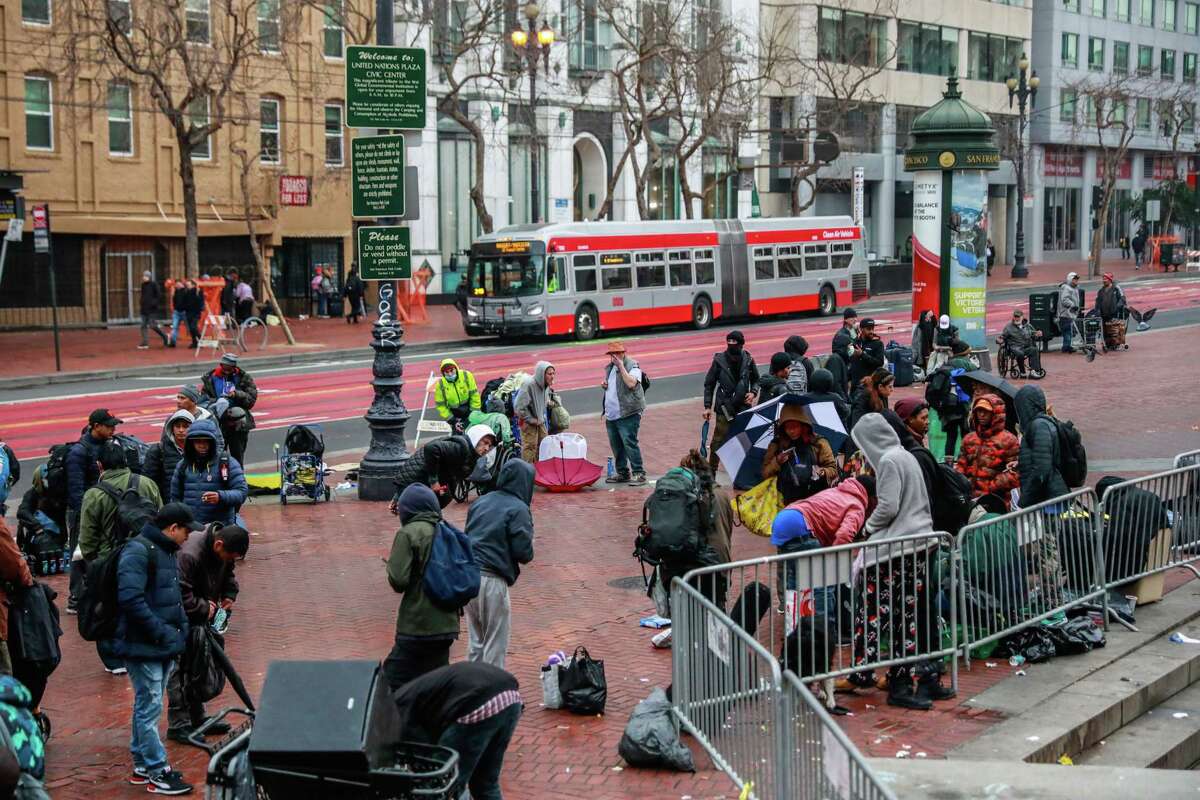
I have been in a lot of pain watching the situation on the streets of San Francisco from afar. I have been turning the situation over in my head more than I should. I have a couple of reactions. I watched a YouTube video from inside a car crossing Market at 6th, a route I’ve taken many times. There weren't just a few, but hundreds of addicts on the street, shooting up, nodding off, trading drugs. From what I could read, the drug was probably Fentanyl. Nasty shit. I was shocked, and I know a few things about street drugs.

Some local business owners want the city to close U.N. Plaza, which is overrun with illegal activity, including vending.

Some local business owners want the city to close U.N. Plaza, which is overrun with illegal activity, including vending.


I’ve been there. Let’s call it what it is. Step 1. This is full-blown addiction. It’s unmanageable. It’s out of control. It’s causing immense harm. Everyone, from the hard assed cynic to the bleeding-heart liberal, is powerless. Now let’s be clear, I am not in favor of taking the city through the 12 Steps, and I have lots of problems with the system anyway. But it is how I got sober and at least part of the background for my reaction.

There are lots of possible causes: a massive explosion in the homeless population, the exit of high tech and the resulting economic downturn, the massive disparity in wealth, and the lack of savvy leadership. But fuck it, in my recovery, it wasn’t that I was lonely or poor or weird, although all that was also probably true. It was the drugs. No matter who is painting the picture or analyzing the problem, don’t lose track of the fact that it’s the fucking drugs.

But then I had a kind of revelation. How did I get sober? Just the steps weren’t enough. Not even close. I also had a vision of what my life could be. Maybe I’d hidden it away. Maybe I’d forgotten it. Maybe my cynical side didn’t believe it, but I knew I was living in the shadows. There was more to life than crystal meth.

San Francisco has had a vision. At least it used to. It was the gateway to the Gold Rush, the Golden Gate. It was Gold Mountain for the Cantonese, whose indentured servitude was really just a new version of slavery prohibited after the Civil War. It was the Heart of Golden West, the coast where America built defenses to fight the Great War in the Pacific. It was the place where soldiers and sailors returning from Guadalcanal and Corregidor disembarked and began to recreate their lives rather than going back to the empty prairies and plains between the coasts.

San Francisco has also been known as The City on a Hill, Gay Mecca, Baghdad by the Bay, though I could never really figure out why Baghdad, but that was Herb Caen, and he came from Sacramento, and he was just a newspaper hack, so what the hell did he know anyway? It sounded cute. Jack Kerouac called it Frisco, thus planting him as an outsider. It was a safe haven for the Beat Generation. Ginsberg read Howl in the Western Addition. It changed the face of American literature all the way to the Supreme Court when that meant something. It even helped us define what we can do with language. Mr. Justice [Holmes] said: “A word is not a crystal, transparent and unchanged. It is the skin of living thought and may vary greatly in color and content according to the circumstances and the time in which it is used.”

Part of the vision of what was possible in San Francisco--if you don’t like it, then change it, and change yourselves in the process.

As a San Franciscan for most of my adult life, I know it as the place where the Stonewall Revolution met middle-class gay life in a way that changed the political and social landscape forever, as well as provided the testing ground for its cohesion during a horrific and tragic public health crisis. That required vision and leadership. Many, but one man in particular, Harvey Milk, rose to the occasion at great personal cost, and the GLBTQ community never looked back. That took vision of what was possible against all odds.

The fight against HIV/AIDS was actually longer in terms of San Francisco history, and much more costly in terms of deaths and dollars. Because for more than a decade, AIDS was a certain death sentence, it was also an existential crisis for so many friends and comrades. Very difficult terrain. But over time, with an enormous amount of self-sacrifice by far too many people, including prodding an underfunded medical research community, there was a real breakthrough.

The problems are huge. The addictive properties of Fentanyl are 500 times more extreme than any other street drug that has ever been available. The population affected is less educated, articulate, and organized than the mostly gay men and women who fought AIDS or rallied for political clout.

The political leadership is simply not equal to the task. But London Breed isn’t the real problem is she? She may be totally corrupt and a complete idiot, but it’s too easy to lay the blame for a completely hopeless situation at her feet, or any feet other than my own. A lot of people are doing that. But she does seem to be adrift.

What has happened to San Francisco? 38,000 individuals in the Bay Area are homeless, an increase of 35 percent since 2019. San Francisco Mayor London Breed wants to carve out $692.6 million in homelessness spending next year to help meet the city's five-year plan to cut homelessness in half. That’s roughly 18,000 a year per person. But currently, my sources tell me that a homeless person in San Francisco can receive up to $10,000 in benefits. This is no longer assistance but an incentive.

Someone said that circumstances have created the “perfect storm,” the flood of drugs and the increase in vulnerable populations would defy Wonder Woman. Difficult, yes. This person also mentioned that treatment “beds” are empty, in other words, that there are opportunities for addicts seeking treatment to receive professional intervention, but no one wants to get sober. Perhaps this is true. But even after highlighting the problem in 2019, Breed just this month figured out that there might be an easily accessible database to direct case managers, addicts, to these empty “beds,” possibly life-saving treatments.

The existing nonprofits and substance abuse agencies are bloated, ineffectual, and stretched too thin. I just counted 15 free treatment programs, 28 inpatient drug & alcohol rehab centers, 51 outpatient, plus 23 detox centers in the Bay Area, that’s more than 100 separate agencies listed online serving various populations. I appreciate the need for programs suited to an addict’s needs, but you’re not going to convince me that the duplicate administrative costs, already high, as well as multiple development departments chasing the same dollars to run their programs, are not draining resources.

Businesses, homeowners, and others with a stake in the outcome have been pushed beyond any reasonable limits. Market Street is now almost completely shuttered. San Francisco’s tourism business of more than 8 billion dollars is going to take a massive hit. Friends who still live in San Francisco tell me that they feel at risk whenever they venture outside.

Who is at fault and who has the power to do anything? The blame game is fun when we really haven’t got a clue about what to do, but really, does that do anything to even begin to alleviate the dire situation? No.

Wes ‘Scoop’ Nisker said, “If you don't like the news, go out and make some of your own.”

I am confident that San Francisco can create a vision that will save its soul. The situation seems extreme, but not insurmountable. It seems to me that the missing piece is a vision of what is possible.


Wednesday, July 26, 2023

Dianetics paves the way for Rasputin

An old friend from Naranjo's first Seekers After Truth group asked if I would be interested in joining her for a “spiritual event.” She gave me no real information about the evening other than it was being organized by a woman whom my friend had met in Scientology, and there was an obligation of friendship. 

I also had an obligation of friendship, though it would be tested, and it turns out, for much longer than this brief evening in an extremely ordinary American suburb, temporarily transported into the intrigue of late Imperial Russia. My SAT friend had responded to Naranjo’s call--I think he might describe it as a suggestion but certainly not a command--to sneak into Scientology and steal their technology. She had been trained as an auditor and reached a rather high level, which took an enormous amount of time and energy. Subsequently, she quit the official church and worked with a group of renegade Scientologists. Others who responded to the challenge were not as fortunate. Even in the 70s, joining Scientology was not akin to joining your local Methodist Church to give your kids a groundwork in the Judeo-Christian tradition that is the backbone of democracy. It was an insidious cult. In retrospect, Naranjo’s cavalier attitude was unethical and shared the distinct smell of cult practice.


I followed many of Naranjo’s suggestions as if part of the shock troops of an esoteric army aimed at recovering the secret practices that would lead to our liberation. I completed the communications course at the Berkeley Mission of the Church of Scientology, something I later learned was akin to a franchise, started by some people who had reached a certain level, “going clear.” When I asked about Scientology’s attitude towards being gay, I was told that if I fully understood that the true purpose of life was survival, I would see that I had to procreate, and a bit of auditing would clear up any same sex attraction that was lingering in my bank. I said thank you very much, but I would not be coming back for any more classes or auditing..


I remember my exit interview quite well. I had to visit the Ethics Officer. I was told that they wanted to make sure that I had no “withholds” regarding my treatment in the Mission. I said no to whatever questions were asked, and apparently my needle was floating, although I remember being angry with the arrogance.  


The Scientologist who was hosting the gathering was a Chinese American woman who lived in the hilly suburb of El Cerrito. It was just before dusk when we began looking for parking between the driveways of the well-ordered, ordinary middle-class tract homes. Most of the neighbors were already home from work, so it took some time. Eventually, we found our way into a large two-car garage, complete with monochrome storage boxes neatly arranged on racks above our heads. My memory tells me that there were perhaps 50 people sitting on the folding chairs, but my rational mind can’t squeeze more than 35 into the space, perhaps less. There was a slightly raised platform where the speaker sat. He was introduced by our hostess. 


After he told us his name, some history of a spiritual lineage, he said that he was going into a semi-trance, and the spirit of Rasputin would be speaking through him. Yes, Rasputin, the wild philandering drunk monk who played a significant role in the downfall and death of the Romanov dynasty during the Bolshevik Revolution. I admit that my interest was piqued. I wondered if I could ask a question of the sex life of the young princesses who would meet a grizzly fate, but almost anticipating my perverse interest, he said that he, Rasputin, would not entertain questions, but if we paid attention and held a question in our hearts, we would find our answer.

Our medium had been a used car salesman who found his way to Dianetics. Apparently, a bit of clearing opened the way for him to channel the Russian mystic gone rogue who could now proffer valuable advice so that we would not repeat his tragic mistakes. I found no answers, but maybe I didn’t have any good questions, except where did our semi-trance medium pick up the Russian accent. It was pretty hilarious. He did more than a full hour, sounding like a drunk Boris Yeltsin. 


I held my tongue, paid the requested donation of 5 bucks, it might have been as high as 10, and left rather unenlightened other than knowing that finding parking in the El Cerrito hills after 6 PM was not a piece of cake. I think I turned to my friend and said, Well, that was something. I don’t know what the financial arrangement was between the host and the medium, but the take could have been anywhere from 350 to 500 dollars, or more — in 1990 dollars. Not bad for a few hours, better than hanging out on an asphalt parking lot trying to sell beat-up Toyotas. 


Although I tried for many years to keep our friendship alive, this woman from SAT’s early days decided that she would not tolerate anything negative I wrote about our early work with Naranjo and cut off all communication. My obligation of friendship is to remove her name and any identifying characteristics. If the work we did cannot stand the scrutiny of honest examination, we deny any inherent value in self-exploration. I will do anything to prevent someone from setting foot inside any Mission of the Church of Scientology, although I am sure that the truth-speaking ghost of Rasputin is available for consultation. His rates have undoubtedly increased. It was more than 30 years ago.


All the particulars of these events actually happened. What in the name of God were we thinking?


Thursday, June 29, 2023

Go Ahead, Shame me!

I remember a heated discussion with a guy whom I admired for his wit and creativity. He made his money being a DJ in a gay club, but he'd honed his skills and made an extremely respectable living. I am unsure of what he’d done to get educated, but he was obviously bright and could put a sentence together. In a public discussion, he bemoaned his slight understanding of Numerology, which would have obviously pointed to the correct decision. I probably--no assuredly--said something derogatory about relying on Assyrian soothsaying to arrive at a rational conclusion, and he angrily accused me of “Number shaming.” These were the heady days of politically correct lingo when you couldn’t call a fat drag queen fat, even if she called herself Fat Fanny, but what I remember most was his indignant anger that I called into question magical numbers as a way to truth.

One of the early proponents of the Hoffman Quadrinity Process was the Psychic Lady Sonia Choquette. She would apparently go into a trance state, connect with her guides on the supernatural plane, and give you advice. I checked her website, and she is still selling--for $1200, she will give you an hour session over the phone. (I didn't make the mistake of adding a zero. That is more than the price of an Air France round-trip ticket from San Francisco to Paris. No one is going to believe me if I warn them that they’re being scalped, but I was more interested in something that I saw in one of Choquette’s early online bios. What does someone say about his or her credentials for the Mystic Arts? Choquette claimed that she studied at the Sorbonne. I couldn’t stop laughing. I went and checked to see if there was even a course or two on comparative mysticism in the curriculum. Nothing. Perhaps she'd been taking basic French and was daydreaming in the back row rather than paying attention to the proper use of the ellipsis. Either that or she concocted the verification of her abilities from one of the most respected Universities in Europe,

Bob Hoffman originally called his Process, The Fisher-Hoffman Process of Psychic Therapy. There it is, right in the name. A psychic is a person who claims to use extrasensory perception to identify information hidden from the normal senses, particularly involving telepathy or clairvoyance, or who performs acts that are apparently inexplicable by natural laws, such as psychokinesis or teleportation.

If you knew Hoffman, trusting him for information that is normally hidden is a stretch of the imagination. Probably the only way to accept it is to say “apparently inexplicable by natural laws.” Or you should trust professional psychotherapy.

Apparently, the Hoffman Institute agrees with me. They have completely removed any mention of Hoffman's psychic abilities. I think that the narrative is to portray Hoffman as a kindly Jewish grandfather. “Gifted Intuitive” is substituted for psychic,

Ms. Choquette now calls herself a “six-sensory consultant,” whatever that means. Go ahead, accuse me of “psychic shaming.” Is Fat Fanny going to punch me out? At least she was being honest.