Search This Blog

Tuesday, January 6, 2026

A Meditation on Meditation

How about a New Year’s resolution to dedicate some time every day to meditation? Not lip service or telling yourself it's a good idea, but really sitting down and meditating. James Ishmael Ford graciously highlighted some of my work with “The Examen” of Saint Ignatius in a sermon he gave a week ago Sunday at the Neighborhood Unitarian Universalist church in Pasadena, California. As an experiment, I removed almost all of Ignatius’s theology, but I didn’t intend to make him some hidden agnostic Zen Master. I just wanted to see if the Examen still had any teeth in a more agnostic context. The jury’s still out. Here’s a link to my piece, Looking at The Particular Examen of Saint Ignatius with Fresh Eyes.

A Meditation on Meditation 

Getting a handle on a difficult term

James Ford

January 5th, 2026


The following is substantially the sermon I delivered for the worship service at the Neighborhood Unitarian Universalist church in Pasadena, California, on the 28th of December, 2025. If you are wondering what the hubbub is when people speak of “meditation,” perhaps this will help…


When I’m off for a Zen meditation retreat, I’ve long since stopped being mildly annoyed when friends respond to the news with something like, “Oh, I wish I could take off for a few days and just chill, too.”


Zen meditation retreats are many things, but chill is not something I would call one. Nor relaxing. Nor getting away.


What I realize is that when people use the word meditation, it really needs further definition.

Here is one way to begin to look at that term, and to consider whether it might actually be something of use, and if so, what kind of meditation might one seek.


I’ll start with a brief exploration of what people sometimes mean when using the word. And then a bit deeper of a dig into one or two ways of meditating that might be useful to many. And maybe tease another kind of meditation for those who are throwing themselves deep into the quest for meaning and direction.


I recall many years ago visiting the renowned San Francisco Zen Center. They have a tiny bookstore, which I like to drop by and investigate when I find myself at the Center. This time I noticed there was a small sign on offer. It read “Don’t just do something, sit there.”


I delighted in the pure counterculture of that sign.


In a sort of bottom-line sense, meditation usually means something we do with our heads. Often it is bringing our heads and our bodies together. Depending on who you’re talking to, meditation can be body scanning, that is noticing and usually relaxing parts of our bodies. It might involve visualization, or a somewhat similar form of guided meditation. It can be as simple as reflecting maybe on the day.


And. There are forms of meditation rooted in religious traditions, like Buddhism’s practice of loving kindness or Christianity’s Lecto Divina, reading sacred scriptures mindfully. Some meditations note thoughts or feelings as they arise. Others incorporate breath practices ranging from counting or following the breath to kundalini yoga using the breath to awaken energies. While still others are other kinds of body practices ranging from walking meditation to Qigong or Hatha yoga.


To begin a list.


For most secular forms of meditation might be particularly of interest.


The most probably most famous of these is Mindfulness Based Stress Reduction, MBSR to the initiate. It’s a program developed by Jon Kabat-Zinn who was then a professor at the medical school at the University of Massachusetts in Worcester, and who would become the founder of the school’s Center for Mindfulness in Medicine, Health Care, and Society. Looking at his program, it is at its core simply dropping religious language from the ancient Buddhist meditation manual the Satipatthana Sutta, that is the “Discourse on the Foundations of Mindfulness.”


That text while probably drawing on sources that may go back to the historic Buddha himself, is generally believed to have been compiled in the first century before our common era. Kabat-Zinn expanded this meditation manual with other practices like guided meditation and yoga into an eight-week course he called that mindfulness-based stress reduction.


It has become wildly successful in the medical community to aid in stress management, chronic pain, and all in all offering a sense of general well-being. He and his associates moved beyond claims and applied controlled experiments to understand the why of it. Feel free to google for details. (Here’s a link directly to them) Out of his and his associate’s work MBSR has become a complementary discipline in treating depression, hypertension, and immune disorders.

However easily adapted it might be to secular uses, its worth noting meditation is rooted in religious or, if you will, spiritual sensibilities. The original goal is not that sense of well-being science has found in many of the disciplines.


With that the distinction between prayer and meditation can be a bit difficult to unravel. In Judaism prayer is often seen as more corporate action, the words addressed to God in a temple service for instance. While the word meditation is often reserved for private contemplation. For Christians while again prayer is often seen as directly addressing God, meditation often involves mentally unpacking a teaching, perhaps from scripture for spiritual solace and growth.


Buried in that is a definition I’ve seen around that while a bit triumphalist has some use. Here prayer is talking to the divine, while meditation is listening. The reality is that in both cases we’re being invited to our deepest encounters with the real. So disdain for the one is probably not as useful as one might think.


But what does this encounter with the real mean?


Well, several things.


Finding ways to give ourselves a little space and to look at what we’re up to can be an enormous gift. And honestly, this is the point of my sharing this meditation on meditation here and now, in the luminous moment of our moving from year into year. And with that finding ways to address the hurts both in our own hearts, and those of the world.


And while there are disciplines I consider going even deeper into the matter, here’s an example of that kind of meditation, where mental health and maybe some larger intimations of connection can be found in the adaptation of ancient spiritual practices.


An old friend of mine Ken Ireland is a former Jesuit. Although I’ve been told by friends there is in fact no such thing as a former Jesuit. I know him as a Zen practitioner who has lived for the last decade in Dharmsala, you know the Dalai Lama’s homebase in India, and because of visa issues for the past year in Thailand.


In his personal life Ken has adapted the famous Ignatian “Examination of Conscience,” also called the “Examen” in a secular, or at least somewhere in that area in a very interesting way. Like with MBSR, I see possibilities for the secularly minded. As well as for others on more specifically spiritual paths. With his permission, I share it here.


“Ignatius (who developed the large practice of his Spiritual Exercises in 1522) recommends undertaking the Examen for a relatively short period of time, 10-15 minutes, at three distinct times every day: upon rising, before the mid-day meal, and upon retiring. In the morning, as your day is not yet filled with conscious and unconscious actions, you resolve to reflect and remember what you are going to look for if you have identified a ‘chief characteristic.’” This is the nub of the discipline, seeing who you really are. Not what you would like to be, but who you are. And this is found in discovering that chief characteristic.


Ken continues. “Usually, you will hone in on what you’ve determined is your greatest obstacle to living in freedom and love - some trait, a repeating negative pattern, a persistent inner dialogue, resentment or prejudice. This becomes a tool that helps focus your review of the day’s events. It is almost always a moving target. You might work with a spiritual director to figure out a useful self-interrogation.”


So, with that invitation, Ken’s version of the steps of the Examen. There are a lot of parts to unpack, but here and now, I’m just giving the bare bones.


First: Quiet yourself. Become aware of the simple goodness of the universe. We see the gifts of life, the blessings of this human world through faith, the eye of love. Be thankful.


Then: Look within to see clearly, understand accurately, and respond generously to what is occurring in our lives.


Then: Review the history of the day (hour, week, or month) in order to see concrete, specific instances of the influence and activity of what we have identified as our chief characteristic. These can be detected by paying attention to strong feelings that may have arisen in situations and encounters. Over time more subtle feelings will become apparent.


Then: Examine these instances, our actions, reactions, words and feelings to see whether you have collaborated with deep inner guidance or yielded to the influence of evil in some way. Express gratitude and regret.


Then: Plan how to use our own inner guidance skillfully to avoid or overcome the negative influence of the chief characteristic in the future.


I’m quite taken with Ken’s secular Examen. It definitely fits the bill for a vital and useful kind of meditation. In his and Ignatius’ invitation, we see both our best and our worst. The real made personal.


And. In my own practice, you may have heard I’m a person of the Zen way, the discipline is less discursive.


That said, there are many mansions in the ways of mediation. Which brings both disadvantages and advantages. To my mind the disadvantages of Zen and its cousin mindfulness, mindfulness as an ancient Buddhist practice; includes less clarity on direction, less focus on accomplishment. But includes the advantages of finding perspective, of seeing who we are and how we exist within a web of relationships with other people and the world itself. And so something I’ve found might well be worth all the bother.


Maybe even something to try on in this new year, rife as it is with opportunities for hurt and healing.


A couple of years ago I wrote a brief piece for the Buddhist magazine “Lion’s Roar” offering a simple five-step guide to a basic mindfulness meditation practice.


I think sharing it here may be a good way to conclude my little meditation on meditation. It’s not Zen, which adds more wrinkles to the matter. But instead is a basic review of that core practice adapted by many in many times and places, including the good Dr Kabat-Zinn.


1. Choose a quiet and uplifted place to do your meditation practice. Sit cross-legged on a meditation cushion, or if that’s difficult, sit on a straight-backed chair with your feet flat on the floor, without (if you can) leaning against the back of the chair.


2. Place your hands palms down on your thighs (or knees) and take an upright posture with a straight back, relaxed yet dignified. With your eyes open, let your gaze rest comfortably as you look slightly downward about six feet in front of you.


3. Place your attention lightly on your out-breath, while (at the same time) remaining aware of the environment around you. Be with each breath as the air goes out through your mouth and nostrils and dissolves into the space around you. At the end of each out-breath, simply rest until the next breath goes out (of its own accord). For a more focused meditation (with fewer opportunities for distraction), you can follow both out-breaths and in-breaths.


4. Whenever you notice that a thought has taken your attention away from the breath, just say to yourself, “thinking,” and return to following the breath. In this context, any thought, feeling, or perception that distracts you is labelled “thinking.” (There are more advanced forms that slice and dice the distractions for finely. But “thinking” really will do.) Thoughts are not judged as good or bad. When a thought (or sensation or feeling) arises, just gently note it and return your attention to your breath and posture.


5. At the end of your meditation session, five minutes, ten, or half an hour, or perhaps a full hour, bring calm, mindfulness, and openness into the rest of your day.


The good folk at Lion’s Roar provided lovely illustrations for the piece. One in particular showed the meditator fully engaged. They had a relaxed person sitting with arrows pointing out from all around her body.


I wrote back about how the illustrations, as pretty as they were, and they were, missed the deeper point of this exercise. We’re not trying to project ourselves out into the world in this practice but allowing ourselves to encounter the world as it actually presents itself to us. That real once more. Or, at least to come as close as such can be accomplished given the limitations of our senses, and our endless proclivity to put a story on everything.


The twelfth-century Japanese Zen master Eihei Dogen in his essay, Uji, “Being Time,” put it like this:


“When the self advances and confirms the ten thousand things, the world, is called delusion. But when the ten thousand things come to the self, that is called awakening.”


In my note to my editors at Lion’s Roar, I said the arrows should be pointed toward the meditator.


They wrote back how that was lovely, but they paid good money for the illustrations and they were staying.


I suspect there are several lessons to be gleaned from that exchange.


So. A little grist for the mill. Something that might even be of use as we move out of this lamented year into, well, who knows what we’re moving into.


And, if you’re wanting to go deeper still, there are other types of meditation, as well.


Zen, for one. The way of my heart


https://youtu.be/esU-3IC2J9E


Friday, December 19, 2025

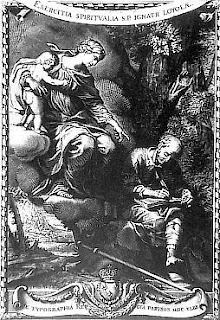
Looking at The Particular Examen of Saint Ignatius with Fresh Eyes

 "This May be Heresy, but I don't care." 

A reformulation of the “Particular Examen” in Saint Ignatius’s Spiritual Exercises


I intend to explore the possibility that Saint Ignatius's Examination of Conscience, the Examen, might be useful as a rigorous way to focus our inner search. It’s an Open Source for anyone who wants to lead a full life in their communities and the universe. It’s probably not for individuals who confine themselves to a predetermined set of rules or conventions about behavior, love or faith, and don’t welcome questions. Leave that to the True Believer. 


I hesitate to edit Ignatius. He was not an atheist or a non-theistic hidden Zen master. His Exercises, however, spring from inner experience, prayer and meditation, and I want to test the hypothesis that they hold up outside Catholic theology. I have removed references to a deity, or to any external guidance not because I denigrate a particular belief, but I trust most believers can quickly fill in the blanks. Leaving them open might also allow space for new understanding or insight. In places I have left the words “faith,” “love,” “grace,” “presence,” “guidance,” and “goodness,” not as absolutes but rather focus points. Look for faith and presence in our lived experience instead of returning to old sermons about how to behave and be good. Examine our inner landscape. Include emotions, memories, and dreams. Think with every part of ourselves, right down to the bones,


Ignatius recommends undertaking the Examen for a relatively short period of time, 10-15 minutes, at three distinct times every day: upon rising, before the mid-day meal, and upon retiring. In the morning, as your day is not yet filled with conscious and unconscious actions, you resolve to reflect and remember what you are going to look for if you have identified a ‘chief characteristic.’ Usually you will hone in on what you’ve determined is your greatest obstacle to living in freedom and love--some trait, a repeating negative pattern, a persistent inner dialogue, resentment or prejudice. This becomes a tool that helps focus your review of the day’s events. It is almost always a moving target. You might work with a spiritual director to figure out a useful self-interrogation.


Here are the steps of the Examen*


  • Quiet yourself. Become aware of the simple goodness of the universe. We see the gifts of life, the blessings of this human world through faith, the eye of love. Be thankful.


  • Look within to see clearly, understand accurately, and respond generously to what is occurring in our lives.


  • Review the history of the day (hour, week, or month) in order to see concrete, specific instances of the influence and activity of what we have identified as our chief characteristic. These can be detected by paying attention to strong feelings that may have arisen in situations and encounters. Over time more subtle feelings will become apparent. 


  •  Examine these instances, our actions, reactions, words and feelings to see whether you have collaborated with deep inner guidance or yielded to the influence of evil in some way. Express gratitude and regret.


  • Plan how to use our own inner guidance skillfully to avoid or overcome the negative influence of the chief characteristic in the future.


November 16th, 2006


The Examen was a breakthrough in the pedagogy of prayer. Human beings are certainly capable of self-examination, and Christians can find inner peace and clarity without Ignatius’s guidance. But he did recommend a method of prayer radically different from the ritual of confession and penance (although he certainly didn’t exclude them). He crafted a way to examine our inner landscape, the particular set of inner motivations and proclivities that govern our lives, and then refocus with an intention that we set for ourselves. 


Many people believe that prayer is like “talking with God,” and that it is the most natural of any communication. I don’t believe this is even close to the truth. For Christians it would mean that the results of Original Sin magically disappear with baptism or conversion. This is not supported by most of what we can gather from the records left by mystics and saints, and it certainly flies in the face of most Eastern teachings regarding humankind’s sleeping, inattentive, deluded state.


If God actually speaks to us, how do we know that our own channels are not jammed with well-intentioned instruction and misinformation at best or unexamined prejudice and obfuscation at worst? I recently saw some clips from a TV documentary called “Camp Jesus” about a fundamentalist summer camp for children. After the adult woman leading a prayer group made the rather startling accusation that Harry Potter should be in Hell, there was an interview with a young 12 or 13 year old boy who was a preacher. The boy said with absolute conviction that he regularly talked with God about his future, but when the camera switched to his father, also a preacher, and I began to listen for the subtext of what the father said, I felt that a strong, irrefutable case could be made that his son's “godly” conversations were nothing more than interiorization of subtle and overt parental messages and prejudices. I am certain the kid believed that Harry Potter was hell bound, and sadly he was destined to be just like his dad.


Prayer has to be taught and learned. How it is taught changes. We learn about love as we live out our lives; we share, and try to teach our children, from our experience. This learning cannot happen in a vacuum: my friend Daniel Shurman refers back to this phrase from Episcopalian liturgy: what is the Spirit saying to the Church? We are always listening and learning, both from the Source of All That Is and from one another.


After filling the page with distillation of Ignatius and reflections, I remember the caution of a very astute Jesuit spiritual guide: “Our capacity to deceive ourselves is infinite!” This leads to another set of cautions: don’t be duped and fall for an easy answer, but on the other hand, don’t let this caveat become an excuse to give up your quest when you become discouraged because you certainly will. Stick with it.


__________________


Notes


It was very difficult to find the exact text of Ignatius for the Particular Examen online. The internet is flooded with many people using the header “The Examen of Saint Ignatius,” and then freely adapting them. I have lots of company; whether or not it is good company, the jury is out. While my adaptation is admittedly one of the most theologically extreme, I have explained at some length my reasoning, and include an English translation of the original text from The Spiritual Exercises. 


*The text:


The first point is to give thanks to God our Lord for the gifts received.

The second point is to ask for the grace to know my sins and to root them out.

The third point is to demand an account of my soul from the moment of rising to that of the present examination, hour by hour or period by period. The thoughts should be examined first, then the words, and finally the actions.

The fourth point is to ask pardon of God our Lord for my faults.

The fifth point is to resolve to amend with the help of God’s grace. Close with the Lord’s Prayer.

My conversation deals with the Particular Examen, and the text from the Exercises is specifically for what is known as the General Examen. The steps are the same for both. The general examination surveys all the morally significant actions of the day, so far as we can recall them, while in the particular examination we focus our attention on one particular fault against which we are struggling and the corresponding virtue we are trying to cultivate. 


From The Spiritual Exercises of St. Ignatius Loyola. Edited by Fr. Martin Royackers, S.J.

__________________


The woman who inspired this essay, Annemarie Marino, died on May 20, 2006. I will always remember her bright mind and generous heart. We had wonderful conversations. Please add your prayers to mine that she has found peace and her heart's desire.

And my deep gratitude to Bonnie Johnson who inspired so many by the way she lived her life. She continues to be a source of my inspiration.

I invite anyone who reads this and wants to comment or share something about their experience using the Ignatian Examen to leave a comment or contact me. If you are interested you can also check out the wide selection of books, articles, and websites that Morgan Zo-Callahan and I put together, An Ignatian Bibliography.


Sunday, December 14, 2025

Music, Genius & Surprise


December 2nd, 2007


I wanted to show the Garapons that we have some culture in San Francisco with a trip to Davies Hall and a concert by the San Francisco Symphony under Michael Tilson Thomas. MTT never disappoints. When we bought the tickets, I found out that MTT was not on the podium. Disappointment.

Let’s go anyway. Wednesday was the only night Jean and Marie-Christine had for un spectacle musical!

As we sat down, I began to read the program; by the time the musicians had taken their places, I knew that we had really lucked out.


There are some moments in life that astonish, that knock your socks off. This was one. With music, somehow, it seems that your body can respond if properly tuned, even if words fail. You just sit, stirrings arise from deep inside, and then sometimes are followed by a completely different set of feelings. It is like a journey. Then the last cords sound, and there is applause. The culture tells the body to respond. The emotions choose the decibel level.


I have often wondered what it must have been like to hear young Mozart play. Despite the fact that he was promoted by his father as a kind of musical sideshow to make lots of money, not much different from the parents of any child actors today in Hollywood, or some very famous personalities from the more recent past, such Judy Garland whose experience was not entirely happy, I still have the impression that Mozart loved music. A person could not compose Don Giovanni or the Magic Flute under duress or carrying mental scares.

No question that he was a genius born into the world with such extraordinary gifts that you might think that they come from the angels. And still he had to have some kind of training.

Listening to the remarkable Lise de la Salle play Rachmaninoff’s 2nd Piano Concerto, questions like these flooded my mind, that is after the last astonishing bars had faded. She was born in 1988, began playing at 4, was at the Paris Conservatory by age eleven, and to my ear, at age 19 has the grace and command of an Arthur Rubinstein at the end of his career. Clearly she is a musical genius of the highest order, and it is also clear that she loves the piano. Here is a link to the program notes about Lise.

And what a performance it was. To give a hint of her command of the powerful Russian feeling, the emotions of those opening lines, I found a short video of Mme de la Salle playing the amazing Toccata in D minor Op.11 of Prokofiev.

A spectacular evening. Applause please!

Friday, December 12, 2025

The Indian Tomb of Jesus

In 1983, the German writer on esoteric subjects Holger Kersten published Jesus Lived in India, which popularized the legend that Jesus' final resting place was Srinagar in Kashmir. The claim that the tomb of Jesus is the Roza Bal shrine was first asserted in 1899 by Mirza Ghulam Ahmad, the founder of the Ahmadiyya Muslim Community. 

Mirza Ghulam Ahmad was a religious leader and apologist. He argued that Jesus survived the crucifixion, traveled to India, married, had children, and died a natural death at the age of 120, eventually being buried in the Roza Bal shrine under the name Yuz Asaf (or Youza Asouph). 


In 1976, the Spanish philosopher and scholar of comparative religion Andreas Faber-Kaiser published Jesus Died in Kashmir, presenting what he considered historical and physical evidence to support this claim. Somewhere in this amalgam of legends, we learn that Jesus was returning to the place where he’d spent the hidden years of early childhood until he became a prophet in Galilee, learning the wisdom of pre-Islamic sufis. The storytellers must account for the six-century gap between the execution of Jesus and the founding of Islam. But I quibble. The first wave of newly minted Western seekers had just discovered India and seemed swayed by the notion that Jesus had also been influenced by Indian magic. A shrine with an inscription and a name was, of course, conclusive evidence.


I’d read at least an abbreviated account of the connection between Jesus and India. On my second trip to Srinagar, I asked my host, Gul Mohammed, the son of a Kashmiri merchant I’d met in MacLeod Ganj, if he could arrange for a local guide to take me to the tomb of Jesus. A few days before, there had been an incident in the ongoing tension between the majority Hindu government of India and the Muslim majority population of Kashmir, and I’d been told that a white face might not be welcomed in the Old City. Of course, Mo knew an older, well-connected, respected, and savvy Sunni driver who could get us in and out safely. 


But first, didn’t we want to visit the world's oldest wooden mosque? This is Khanqah Shah-i-Hamadan, 14th century. Made entirely of wood, it is unusual and stunning. We got out of the car, but we were not allowed to enter. The guards, however, were extremely courteous and friendly. They left their positions at the main gate, came up to us, introduced themselves, and showed us as much as they could through the windows. They had been the target of extremists, so their instructions were only to admit Muslims who were intending to pray.

File:Khanqah Shah-i-Hamadan - Wooden Mosque - Old City - Srinagar - Jammu & Kashmir - India (26232458334).jpg


The main mosque is pictured in Srinagar on December 18, 2019, as prayers were offered there for the first time in nearly 5 months after Jammu and Kashmir was stripped of its special status and split into two federal terriorities. PHOTO: AFP


Our next stop was Jama Masjid. Situated at Nowhatta in the Old City, the Mosque was commissioned by Sultan Sikandar in 1394 CE and completed in 1402 CE. As we drove in, just past the main gate, looking for a parking space, a few women began to gather around our car and pound on the bonnet. More women began to run over towards us. Our driver-guide apologized, backed up quickly, and told us we would have to skip it. He then told us that we’d been spotted; we could continue an abbreviated tour, driving slowly but not getting out of the car. 


Probably 15 minutes later, we drove up to a very ordinary building, about the size of a Western two-car garage. The roof was tin and needed a coat of paint. The sign said that the opening hours were restricted to Wednesdays between noon and 3 PM. It appeared to be the shrine of a minor saint, not a major figure like Jesus, who appears in the Quran. 


The belief that the tomb belongs to Jesus is a central belief for the Ahmadiyya Muslim community but is rejected by mainstream Christian and Muslim scholars, as well as the local Sunni Muslim caretakers of the shrine, who maintain it is the grave of a local Sufi saint. Modern scholarship generally dismisses the theory as legend or myth with no historical basis. 


Photo credit: Indrajit Das/Wikimedia Commons

According to local Kashmiri traditions, Yuz Asaf was a saint or prophet who came from a foreign land. A few historical interpretations link "Yuz Asaf" to an Arabic or Urdu variant of Josaphat, which is also associated with the legend of Barlaam and Josaphat, an Islamized and Christianized version of the life of the Buddha.


Photo credit: Indrajit Das/Wikimedia Commons

Yes, this is the small shrine that we were taken to when I asked to see the tomb of Jesus. You can see there is more than a little dispute over whether this is his actual burial place. You know that the mullahs want to settle a dispute quickly and definitively when there’s a large sign with a long quote about Jesus from the Quran.


There it is, just as we saw it on our trip into the Old City. It was on a closed day, so we couldn’t get out of the car even under more favorable circumstances.  It is not common for white skinned Westerners to be wandering around this part of Srinagar unless you’re a scholar of esotericism trying to prove a point.

The grave of Yuz Asaph. Photo credit: Indrajit Das/Wikimedia Commons


Standing in the need of prayer. After our adventure in the Old City, we were welcomed inside at Hazratbal. It is a huge Mosque, not located in the old city, but on the eastern shore of Dal Lake. We took off our shoes, faced Mecca, and prayed.

Hazratbal is a Muslim shrine in Srinagar - srinagar mosque stock photos, royalty-free photos and images