Search This Blog

Showing posts with label Criticism Fisher-Hoffman Psychic Therapy. Show all posts

Monday, January 30, 2023

The Case against Bob Hoffman

A respected Zen teacher told me that she had encouraged several students of abusive Buddhist teachers to pursue lawsuits. After she heard the account of Hoffman’s relationship with me, she said, “Hoffman was a criminal. Simple.” She was right. California law stipulates, “Therapy Never Includes Sexual Behavior. . . . Sexual contact of any kind between a therapist and a client is unethical and illegal in the State of California. Additionally, with regard to former clients, sexual contact within two years after termination of therapy is also illegal and unethical.”*

When Governor Jerry Brown vetoed a bill that would have extended the statute of limitations for clerical sexual abuse, he said, “There comes a time when an individual or organization should be secure in the reasonable expectation that past acts are indeed in the past and not subject to further lawsuits.”* (SacBee)

Bob Hoffman has been dead for more than 20 years, and he raped me 50 years ago, but I’m just uncovering the severe emotional consequences of his abuse. In the last part of my life, I know that the effects of abuse can extend beyond any "reasonable expectation" that they are past. I also acknowledge that most reasonable people would think that such old grievances might not be subject to any lawsuits, and I do try to function as a reasonable person. However, as the Hoffman Process teaches, the effects of our negative actions can persist over generations.

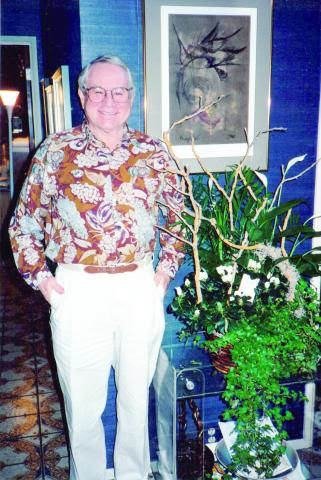
To paint over the dark side of Hoffman’s legacy with the portrait of a grandfatherly spiritual seer who wanted everyone to lead lives of freedom and happiness is total nonsense. Most people who were close associates of Hoffman will admit that he was an extremely difficult man, and that his interactions with clients were at best unconventional, at worst, unethical and abusive. Stan Stefancic labeled him a “malignant narcissist.” But these same people will also argue that Hoffman's basic insight allows them to overlook what they characterize as eccentricities. For years, I tried to excuse his behavior—perhaps he was the gay kid who was bullied and overcompensated when he was in a position of power.

Hoffman became the bully as well as a predator, and if I let bullies get away with it, I am complicit. This I cannot and will not allow. Whether or not his basic insight into human behavior as “negative love” can stand the test of time or whether or not the effects of his revolutionary “psychic therapy” are worth the expense, I cannot say. But I will say that Bob Hoffman was a criminal.

* It should be noted that Brown is a former Jesuit, and the Society of Jesus continues to be subject to numerous accusations of abuse by its members dating back many years.

*Hoffman operated as a clergy person. He was a recognized psychic in a spiritualist church. He called the people he trained as “psychic therapists.” Now the Hoffman Institute calls them “teachers.” But whether therapist, clergy person, or teacher, the title does not excuse him from the moral or ethical standards that apply to professionals interacting with the people who come to them for help and pay them money for that help.
___________

Where was that wise person you could seek out for guidance? Who was trustworthy? I had put my trust in Claudio Naranjo and on his recommendation, I entrusted my mental well-being to a man who abused me. I was in such enormous transference that I didn’t recognize it; it persisted for years and caused enormous damage. How did I allow this to happen, and why am I talking about it now, so long after it happened?

After I completed working with Hoffman nine months later, he began to show up at places where I hung out, stalking me. He’d been my therapist and knew an enormous amount of my psyche so he knew how to get to me. He was grooming me. Five months after the end of our work together, he invited me to dinner. After a last drink at The White Horse Tavern, he dropped me off at my apartment and invited himself in. Then he raped me.
___________

Shortly after 5 on a hot Wednesday afternoon, I hand-delivered my “Emotional Autobiography with Father'' to Hoffman’s office on the second floor of a building in downtown Oakland. His secretary had already left for the afternoon. Hoffman was recording his feedback for another patient on a cheap cassette player. He’d thrown his feet up onto the desk. I stood awkwardly in the half-open doorway. There was no chair and no invitation to engage in a conversation.

He told me to hand him my work. Right on the spot, he’d read a paragraph, comment on the emotional tone, and then make a simplistic, predictable connection between the specific circumstances I’d described and a negative pattern or character trait that he asserted I’d adopted from my father in an attempt to bargain for love.

Hoffman read through to an incident about my father resetting the stone wall at the back of our lot. As Dad was lifting stones into a wheelbarrow, he uncovered the nest of a woodchuck who’d built her nest in a cranny between the rocks. As she ferociously defended her cubs, my father killed her and her cubs with his shovel. As I remembered it, he began to beat her viciously. Her screams were chilling.

Hoffman complimented the emotional tone of my writing, but then he began to raise his voice. Obviously my Dad was a homosexual he said, and then, “You’re also gay, aren’t you?” I countered how he could deduce that my dad was gay based on bludgeoning a woodchuck? His voice became louder and louder. He just repeated “You’re gay.” Now he was almost screaming—obviously my father was a sadist. What? Then he yelled, “You’re gay? Don’t play games with me. I know these things.” I said, of course I had gay feelings, but I was unsure if I was gay. “Don’t play games with me,” his voice was angry; his face was red. I had watched Hoffman attack clients, but I could barely believe that I was now his victim.

My Dad was not gay. The idea of having a same sex relationship never crossed his mind in his entire life. Hoffman’s readings were projections and his own pathology. What he asserted was so off base that it isn’t worthy of even the weirdest pop psychology. But because there was one note of truth in analysis–that I was in denial about my own homosexuality–the whole thing became plausible, and I destroyed any possibility of a real relationship with my father for the next 30 years. In exchange I got the debilitating transference to Hoffman.

I remember that the price of that first group Process was no more than $300. The real cost was devastating. Instead of dealing with coming out in care of a professional, compassionate therapist, I had the bad luck to land a closeted gay predator as my guide. When I described this incident to my therapist, his immediate response was: when you stayed, he knew he had you. And he did.
___________

When I returned to the Jesuit School of Theology in Berkeley that fall, I told my superiors honestly what I had experienced, and they supported my decision to reconsider ordination. I took a leave of absence from my religious order and began an extremely difficult period of my life. I loved being a Jesuit, and if it weren’t for the obligation of celibacy, perhaps I might have been able to carve out a very happy and successful life as a priest.

Another man in Naranjo’s SAT, Hal Slate, and I rented a small apartment on the Berkeley/Oakland border. It was just a short walk from the White Horse, a college-town gay bar.

Towards the end of September, Hoffman started to show up at the bar every night around 9 o’clock, leaning awkwardly against the elbow bar, pretending to look off into some distant corner of the universe. He claimed that he normally stopped by on his way home. Another lie! He later admitted that he never went to gay bars because being recognized might negatively affect his important work. In reality, he was tracking my movements and making himself known. This was exactly stalking–out of the predator’s playbook.

I recall one conversation in particular that helps me accurately date Hoffman’s obsessive pursuit; it also should have alerted me that he knew exactly what he was doing. Almost in passing, and perhaps as a way of excusing or justifying his behavior, he mentioned that although the usual period for a therapist seeing a patient was 6 months after the professional relationship had ended, he thought that I had so completely and lovingly divorced myself from my parents, perhaps the usual 6 months could be compressed. Misinformation, or perhaps he considered himself above the law which in California outlaws sexual contact between client and therapist within two years after termination of their work together..”* Less than 4 months after working with him, he nervously gave me his “private” phone number and asked if he could call me.


Finally, I agreed to go out to dinner with him. He imagined it was a date. I thought it was dinner with a friend. I can’t in any way recreate the events or the conversation that ended with him returning to my apartment, but as with many sexual predators, Hoffman’s ability to read his victim, what he would describe as his “psychic powers,” lent themselves to skillful manipulation. And of course, after working with me on an intimate level for almost a year, he had a real window into my psychology that was far more accurate than his psychic reading.

I can find no silver lining in the story of my abusive relationship with Bob Hoffman, but even if there were one, the relationship was so muddy that I don’t know where to begin to look. It is a lot like trying to write about it. I feel that I cannot write because I would be obligated to disclose too much about what I consider personal failures. I cannot write from the position of a life that didn’t turn out, even though opportunities and possibilities were certainly closed off to me by the events I’m going to describe. The only thing I can say with any certainty is that my life is not what my parents or I envisioned for myself, but it has been my own life, and I am responsible for my choices.


Any light at the end of the tunnel would shine. It would mean that the residue of the abuse was over, and I would be able to forget Hoffman and our relationship. But that did not happen. It’s just not enough for me to declare “This happened,” and move past it as I’ve been counseled from many quarters, new age therapists, love and light gurus. All that I can say for certain is that Hoffman’s selfish actions had an effect on me. Of course, they cut off some avenues and added unnecessary suffering. As I recently told a friend, every gay person I know would love to be guided by the loving, wise, and resourceful example of an older queer man or woman. But by the luck of the draw, I got a narcissistic predator. I’ve told the story of how Hoffman came into my life in some detail in my blog #GayMeToo.

And so I have decided to write about my abuse. The only possible path I see to freeing myself is a thorough investigation of what occurred, including my own missteps. If writing really leads to my liberation, my only real obligation, in the words of Toni Morrison, “the function of freedom is to free someone else,” so I will write as candidly as I can.

After some very awkward conversation and a few glasses of wine, I found myself on the living room floor of my shared apartment naked, on my stomach, being brutally raped. After Hoffman had his orgasm, my anus was bleeding. Then the situation became surreal—I listened to apologies which were actually blame shifting—he told me that pain was normal when a man first had anal sex and that in time I’d learn to enjoy it—that anal sex was an important part of spiritual development because it mirrored the reality of the mother-father god, being both active and passive. I remember this statement after all these years because of the horror and lunacy of justifying rape in the name of some intrasex godhead.

I didn’t throw him out as I should have, had I been capable of it. Every time I think about this, I ask myself why I didn’t say, “This isn’t working. Why don’t you put on your clothes and leave?” But I just kept my mouth shut and endured him trying to apologize for physically hurting me. But when he asked if we could have another date, I did say no. However, in true co-dependent fashion, I left the door open to further contact as friends. I realize now that I had to—I was in transference with him. In fact, we maintained a strained acquaintance until he died.

I had hoped to avoid a painful and lewd description of the sexual encounter, but I have decided to write about it openly, describing its repercussions. A thorough investigation, including my own missteps, is the only possible path I see to freeing myself. If my writing really leads to liberation, “the function of freedom," in the words of Toni Morrison, "is to free someone else.”

I did come out as a gay man in the Hoffman Process, but the process wasn’t coming to terms with a part of myself that I’d kept hidden, festering under parental and societal disapproval. It wasn’t part of a program of careful analysis and self-discovery. I wasn’t led by a professional to see layers of self-deception. Rather, I stood uncomfortably in the doorway to Hoffman’s office, while he, red in the face, screamed that I was gay, told me that I was playing games, and couldn’t love myself. This only reinforced my own learned, negative views of being gay. I sensed the same angry, defensive stance in the way he dealt with his own homosexuality, and he certainly displayed its brutality when he forced anal intercourse.

Hoffman was both a narcissist and a predator, but I was in such denial that I allowed myself to be manipulated. Over the course of intermittent conversations which spanned more than 25 years, I discovered that he lied about many things, he exaggerated, he made empty promises, and he entertained grandiose ideas about himself; Dr. Fisher, the being whom he called his spirit-guide, had not been, as he proclaimed publicly, a family friend but rather his therapist; he felt he was destined to have a young lover because the immense contribution he was making; he had singled me out when he first saw me in Naranjo’s SAT; he started frequenting the only gay bar in Berkeley to stalk me, and not because, as he told me then, he usually stopped in to relax on his way home. The truth is that initiating a sexual relationship with me was a criminal violation of his professional responsibility as a therapist, mentor, and spiritual guide, but his psychosis did not allow him to understand this.

In true predator fashion, he groomed me. He told me that I was destined to become a leader in the gay community—if I played my cards right, and listened to him; that I had extraordinary powers, like his spiritualist mentor, Rose Strongin, singled him out as a person of great psychic abilities. He also insisted that I was attracted to him, and he knew it because he was a powerful psychic, as well as the fact that I had an erection during our encounter. Recalling this fills me with disgust. Most people around Naranjo viewed Hoffman as a buffoon, an eccentric, a con artist, or, at best, a crazy wisdom seer. I thought he was crude, unintelligent, plus being sexually repulsive, yet something compelled me to continue to place my trust in him.

Within a year of our encounter, I’d left the Jesuits, moved to San Francisco with my SAT friend Hal Slate, and began experiencing the burgeoning Castro gay scene of the ’70s. I became promiscuous, but, at the same time, I was very unhappy and frustrated with sex itself. I could not achieve orgasm. I cannot claim that Hoffman’s brutal abuse was the direct cause of my sexual dysfunction, but I am certain that it played some part. But my solution to the problem became more of a problem. As in my college days and life as a Jesuit, alcohol became an antiseptic for the wounds. But now, pot, and eventually cocaine and methamphetamines, became a way to lubricate sexual activity.

Monday, June 21, 2021

Tolman Hall, the first Hoffman Process.

A sexual predator grooms me. 


The public narrative about the creation of the Hoffman Process is that Dr. Claudio Naranjo’s strong, professional psychotherapeutic experience guided Bob Hoffman. I will make a case that there is little substance to this claim; that it is a myth and a marketing ploy. Naranjo says in his Introduction to “No One is to Blame” that he played the role of John the Baptist. Did he forget that the relationship did not turn out well? But both were Jews, so perhaps the subtlety escaped them. (For a serious examination of Naranjo’s and others’ contributions, see “The Ontological Odd Couple”).


By Thanksgiving, the conflict between Hoffman and Naranjo in the direction of the SAT Process was becoming apparent. Naranjo’s directions insisted that our exploration be self-directed. The time-honored and well-tested practice of psychotherapy requires that discovery come from the patient him or herself, not the dictates or evaluation of the therapist. Hoffman had no patience and thought it was nonsense. 


Hoffman and Naranjo might have discussed the purpose or therapeutic value of each exercise, but I cannot remember one evening when Naranjo stayed after Hoffman began his presentation. Naranjo maintained control over the direction of the work that we SAT members did through Rosalyn3 hour group meetings once week with several small cohort meetings in between. For Hoffman, that was far too long, more than a month doing what he did in two hour-long sessions with the people who came for psychic readings in the basement of his tailor shop in Oakland.


After our second or third week of the “Bitch Session” against Mother, not even halfway through the Process, Hoffman announced that he and Naranjo had agreed that “The Defense of Mother'' would be an OK place to end their collaboration, as if it were an amicable divorce. Actually, he’d had enough and discovered the Wiffle Bat as a way to get to the core of emotional anger. He said that he and Naranjo had agreed to finish their work together and that be doing his own version of group therapy. 


Hoffman took me aside and strongly suggested that I join the group of people he’d “selected” to do the first 13-week Process in Tolman Hall. He would later tell me that he saw me sitting there in Naranjo’s SAT, and he knew I was “terribly unhappy.” What I didn’t realize was that I hadn’t been “selected,” rather that he’d singled me out to be a sex partner. It was not romantic. With Hoffman, it was transactional. I was being groomed for Hoffman’s self-gratification.


Hoffman made it seem like a huge honor that he’d been invited to use the prestigious Tolman Hall, the UC Berkeley’s Department of Psychology’s classroom and office building, as the venue for his presentation. In reality all it meant was that someone, Hoffman, even his secretary, or perhaps even a psychologist who supported Hoffman, called the campus rental Office, made a reservation, and paid a deposit on a room for an evening class. It was not a fancy lecture hall, actually just a drab narrow classroom with no windows and awkward plastic chairs, but Hoffman could always label his first group “Tolman Hall.”


50 or so people gathered on a January night for Hoffman’s first Process. 


The class, or session, was on Monday night at 7 PM. The 13-week Process quickly became a forced march. Each session had specific exercises with a clear objective, and we had to keep up. He warned us that stragglers wouldn’t make it, that we would resist, but we could just take it as an opportunity to learn about our defenses.  We had till Wednesday at 5 to deliver the week’s assignment to Hoffman’s Office on 14th Street in downtown Oakland in an office building close to his former tailor shop. We listened to his taped feedback the following Monday before the session began.


Hoffman presented the week's objective in a rambling style. It actually felt more like he was caught up in a mental tangent, just let it rip, stream of consciousness. He claimed that he was channeling Dr. Fisher. The spirits on the other side are apparently as disjointed and unorganized as they were in human life when they inhabited bodies, or more soHoffman was channeling a German professor of psychotherapy not known for flights of fancy. (It was recorded, and I found out later that Mariam Brandstatter received the recordings in Tel Aviv and helped put some order and rationale into the presentation).


Usually, Hoffman picked out one person for the demonstration of the purpose of each exercise. Often, he’d just ask, “Who doesn’t understand, or who objects?” And the first person whose hand went up would be asked to come forward. There were compelling moments, even if in retrospect they were needlessly brutal. I remember the demonstration of Negative Love in the first or second session. We had each brought a list of our mother’s negative traits to either the first or second session. One woman, she was a professional psychologist I think, a well dressed large womanI have no idea why her image remains with mevolunteered to “work” with Hoffman.


Hoffman took the list she’d prepared of her mother’s negative traits and admonitions and started at the top. “Your mother complained about your father in an uncompromising fashion. Ok, how often do you complain about your husband?” “Never.” “Really? Be honest. Never? The thought never enters your mind? You’re always positive and loving? Don’t play your games. You never have to stop yourself from complaining, just like your mother did?” And eventually, the woman admitted that she had to fight with herself not to behave in exactly the same way that her mother treated her father. Onto the next trait on the list. Same interrogation. Same result: imitation to get love, or rebellion to the trait and experience conflict. Every thought, every action, every impulse was a conditioned response. There were no redeeming qualities, and no other possibilities. One thing was clear: we were nothing but the sum total of what we’d learned from our parents. Negative love was negative.


The woman was devastated. There was zero therapeutic, compassionate presence when Hoffman dealt with a person and their “games.” It was a frontal, take-no-prisoners assault, and he relished the fight. He ended the attack with a scripted, fake, all-knowing, condescending smile coupled with the assurance that if we honestly stepped into his Process, and submitted to him, we’d come to realize deeply that everyone was guilty and no one to blame, and finally be free from the chains of Negative Love.


Contrast Naranjo’s careful, respectful, even compassionate invitation to look into oneself with Hoffman’s brutality, and the reason why they separated couldn’t be clearer.


I also have to admit that I had never seen my own personality as some reflection of my mother’s in such stark relief before. It was enough to allow me to follow along. 


Hoffman, the Predator, Groomed Me! 


In the sixth or seventh week, I had a very uncomfortable experience. The beginning of Hoffman’s sexual abuse started in a setting that was allegedly therapy!


Late one Wednesday afternoon I hand delivered my emotional “autobiography with father” to Hoffman on 15th Street. It was past 5, and the receptionist had left. Hoffman was sitting at his desk in a cramped office, with his feet on the desk. I stood in the open door. 


He told me to hand him my work, and he began to read it right on the spot. He would read a paragraph, comment on the emotional tone, and then try to make some connection between the specific circumstances I’d described and what he called the negative emotional patterns and character traits that I’d adopted from my father in an attempt to bargain for his love.


Hoffman read through to an incident I wrote about my father resetting the stone wall at the back of our lot. As Dad was lifting stones into a wheelbarrow, he uncovered the nest of a woodchuck who’d built her nest in a cranny between the rocks. As she was ferociously defending her cubs, my father killed her and her cubs with his shovel. As I remembered it, he began to beat her viciously. Her screams were chilling. 


Hoffman began by complimenting the emotional tone of my writing. But then he began to raise his voice. He said that obviously my Dad was a homosexual, and then, “You’re also gay, too, aren’t you?” I countered with a question about how he could deduce that my dad was gay based on his bludgeoning a woodchuck? He just repeated “You’re gay.” His voice became louder and louder. Now he was almost screaming—obviously, my father was a sadist. What? Then he repeated his question: “You’re gay? Don’t play games with me. I know these things.” I admitted that, of course, I had gay feelings, but I was unsure if I was gay. By now, he was shouting loudly: “Don’t play games with me.” I had heard that Hoffman often attacked clients—he claimed that he was breaking us down in order to build us up—but I could barely believe it. 


I was in nearly complete denial about my homosexuality, but my Dad was not gay. I actually think that the idea of a same sex relationship never once crossed his mind in his entire life. I am also certain that Hoffman’s deductions from what I related in my writing were entirely projections and his own pathology. Other things that he said or implied were entirely off base and not even worthy of the weirdest pop psychology. But because there was one note of truth in the analysis, the whole thing became plausible, and I lost any possibility of a real relationship with my father for the next 30 years. In exchange, I got the debilitating transference to Hoffman. I also remember that the 13-week process cost $300. The real cost was devastating.


This part of my therapy with Hoffman happened in March. He began stalking me in September. He raped me in late October or early November.


When I described this incident to my therapist, his response was: When you stayed, he knew he had you. And he did. 


Wednesday, May 12, 2021

The End of Patriarchy and the Beginnings of a Cult

Old Tolman Hall UC Berkeley
I received an email from a Hoffman Process teacher about my last post, “Bob Hoffman, The First Encounter.” After noting that we hadn't spoken in perhaps 20 years, and acknowledging that indeed Bob Hoffman was a difficult guy and, by the way, sorry for the way he treated you, he then asked why I didn’t acknowledge that there are different people teaching the Process now. Why didn't I mention the “defense” of the parent? And why now did I write this “hit piece”?

I will answer this teacher’s questions in reverse order: why did I write this “hit piece” now? I have been writing about the Process for nearly 17 years. When the current owners of Hoffman’s “intellectual property” began to fashion a narrative about the Process that I felt conflated, confused, and distorted some of the history, I meticulously researched and chronicled the early development of the Process in The Ontological Odd Couple, and the Origins of the Fisher-Hoffman Psychic Therapy, which was published on July 31, 2004, and revised September 16, 2006. 12 other pieces followed, several critical of the Process, others talking about my experience of Hoffman and the Process, as well as my sexual abuse at the hands of Hoffman within 6 months after I finished the first 13-week Process, clearly a criminal offense. 

Nothing I wrote was a “hit piece.” I have been as honest and accurate as I can be about the facts and dates. I have carefully described the personal interactions as such, and when I’ve stated an opinion, I’ve labeled it. If any of this does not match some other narrative, please present evidence to support the counterclaim. Just labeling what I write “a hit piece” is not good enough. Ad hominem arguments are the bottom of the barrel.

Now to the “defense” of parents. I ended “The First Encounter” with a description of Hoffman’s unprofessional behavior with his students, patients--the people who signed up for the Process. I said that it was my opinion that it was borderline unethical and abusive. Hoffman claimed that he was “breaking down to build up.” I say he was acting out as a bully for whatever reason his own psychosis demanded, and it went unchallenged. I know I didn’t call him out and over 25 years I didn’t hear anyone really confront him despite an enormous amount of complaining behind his back. If you contradicted Hoffman, you would be considered unsuitable as a teacher or Process owner, and that would cost you a career and money. I know several people who did try to confront him and were fired. He was a dictator who was also very interested in money. I stand by my assessment.

Our SAT group was the first and only Process that Hoffman did under the auspices of Claudio Naranjo, and, as I will show, it was incomplete. A lot has been said and written about Claudio’s assistance, most of that cast as approbation plus stamping it with the seal of legitimate psychotherapeutic practice. I cannot deny that Claudio did remain one of Hoffman’s supporters, and that he continued to see Hoffman as a kind of shamanistic healer through Hoffman’s death. I helped take care of Hoffman at the end of his life and remember Claudio’s visits well, but I want to review and question other claims.

I went back to what Claudio had written about the Hoffman Quadrinity Process in “The End of Patriarchy” to review his actual comments. I was an actor and participant in this history, so it heightened my interest, though it also colored it. Claudio describes his position as that of an ambassador between the intuitive world that gave birth to the Fisher-Hoffman Process and the world of scientific psychology, a role akin to that of John the Baptist. Leaving aside the preposterous messianic claims, he goes on to describe his involvement in the formation of Hoffman’s group process: “Reza Leah Landman led a group of about fifty people (with Bob present as silent witness) using the format of written guidelines. (I produced these guidelines at a time of rare inspiration, and when I visited Bob shortly afterwards, he interestingly commented, quite spontaneously, that Dr. Fischer had been with me.)”

This description is simply not accurate. I was in that group. Claudio was never present (perhaps briefly at the first session to introduce Hoffman. I can’t be certain, but he was definitely never present at any of the other sessions that followed). Bob Hoffman was not in any sense a silent witness. I have described the attitude of Hoffman in the group--after a few minutes of Reza Leah’s low-key instructions, she invited Bob to take the floor and he did. I will also add that I am certain he hated the group process, whether or not he told Claudio that Fisher had inspired the written guidelines. The pace was far too slow, and he had no patience for interpersonal work. The evidence that it displeased Hoffman is that he ended the experiment before it was finished. After about three weeks into the prosecution of Mother, he announced that he and Claudio had agreed to end their work together, and that he would “take us through the defense of Mother” which would be an “OK” place to stop.

That occurred just after Thanksgiving. He also announced that he would be leading his own 13-week process beginning at the end of January in Tolman Hall, the facility of the UC Berkeley Psychology Department. He came up to me privately and suggested that I strongly consider taking part in that process. I remember our brief conversation very well. In my later therapy, I recognized that this was the beginning of his predatory grooming.

The part he did feel had been “inspired” by Fisher was the physical, emotional, verbal, and I would add, necessarily violent expression of anger. It opened the possibility of a deep emotional catharsis after which the artificial process of understanding and forgiveness would foster a deep understanding that “everyone is guilty and no one to blame.” If our pain had been as great as we’d experienced in the Prosecution of Mother, her own pain had to be equally deep and debilitating.

The Defense Process entails envisioning your mother as a pre-adolescent child, telling her story. It is conducted in your sanctuary with your spirit guide as the interlocutor. Hoffman called these imagined scenarios “mind trips” and insisted that they were the channel for real information. You are instructed to ask questions about the origins of the Negative love traits and admonitions that you unwittingly inherited, one by one, leaving no stone unturned.

Of course, in the real world, this is all “Best Guess,” or assumption, or hearsay, or fantasy, or hallucination. If I were to be generous, it might be a “good enough” narrative to allow you to see that your parents suffered the same kind of programming that they passed on. The origins of the exercise were the psychic readings in the tailor shop on 15th street, when Hoffman looked into your past and saw the incidents that excused your parents.

But I do not choose to be so generous. In my own case, the narrative I created was so far-fetched that it destroyed relationships with both my parents. I was actually led to believe that somehow I could get to the root of my struggles with them. After I completed the Process, and the quirky working out of the loving divorce that Hoffman promised, I had so alienated my parents that they cut me off for nearly 20 years.

Of course, this is not good psychological practice. That's a fact. It’s seeing a witch doctor. That's an opinion.

Claudio faults psychoanalyst Mauricio Knoble, who observed in connection with No One is to Blame, “The traditional historical background was missing, as well as the scientific background, the theoretical foundation, the experimental data, the statistical validation, and the bibliography.” It’s a fair question to ask what he replaces it with. Claudio says [I] “hope that I may show that, while the ‘traditional historical background’ has not been known to Hoffman, his work is most congruent with it, as well as with the background of current psychological discourse.” My experience points to a less optimistic view of Hoffman’s methodology, one that skirts the necessary professionalism of psychological work.

The request that I take into consideration that a new cohort of Process teachers followed Hoffman and did not share his unorthodox, borderline practices leads into more New Age mire. The majority were people who came from the same mix who took the Process, members of the SAT groups, refugees from EST, and the work of Werner Erhard, sannyasins who had followed Osho in Antelope and Pune, and a few licensed mental health professionals. I will have more to say about this phenomenon after I describe my experience of the first 13-week Process in Tolman Hall and the story of Hoffman’s stalking and abusing me, which, by the way, was a criminal action.

Here is a link to the description of "Tolman Hall, the first Hoffman Process. Hoffman the sexual predator grooms me."

________________


Other Posts regarding Bob Hoffman and the Fisher-Hoffman Process of Psychic Therapy


The Ontological Odd Couple, and the Origins of the Fisher-Hoffman Psychic Therapy

Bob Hoffman was a Lunatic, a Liar, a Criminal, & a Fraud

Why Do Cults Need to Rewrite History?

The Truth about Bob Hoffman

The End of Patriarchy and the Beginnings of a Cult

It’s a cult, damn it. Nothing more

The Sad Demise of Bob Hoffman 

Jonestown and Our Deliverance from Cults

Bob Hoffman was a criminal. Simple 


© Kenneth Ireland, 2021

Thursday, April 22, 2021

Bob Hoffman, The First Encounter

I was an idiot, slow to learn. I was duped, seduced by the promise of an easy path. I also know that countless other people have jumped at what appeared to be the safety of a lifeboat when they were floundering and in pain. And if they’d managed to save a few bucks, there are always charlatans with a life jacket for sale.

Rocky times are a normal place to begin a spiritual journey, and a good place to begin to write about that search. It is not easy to look back and feel no regret when I realize that I let a pearl slip through my fingers. At 77, I no longer have the prospect of a long leisurely life, no time to indulge in speculation or convoluted arguments. In Zen retreats, they beat a big drum at the end of the day, and caution us to be alert and not let the moment slip away in delusion. I know how little time there is to waste.

It was not entirely my bad luck that I met Bob Hoffman. What was seriously damaging is that I didn’t realize that I’d fallen hook, line, and sinker, and did not take steps to repair the damage caused by my own unresolved transference. Hoffman was a criminal. Period. He sexually abused me less than half a year after I completed the first group Psychic Therapy. He told me it was love. Sexual predators lie.

Something totally unexpected and liberating happened to me during those first few months in Berkeley, working with Claudio Naranjo and his expertise with Fritz Perls’ Gestalt therapy. I didn’t fully grasp the experience, and I tried to hold onto the power of that gift. The context of Claudio’s working with Bob Hoffman to create a group process set the stage for my transference.

When, nearly 50 years later, I began to recognize the truth about my relationship with Hoffman, something equally liberating took place.


Why do intelligent people believe nonsense?I used to think that you could separate the person who originates an exploration or course of therapy from the technique itself, something like the paradox of a wounded healer. But that's far too mysterious. Transference is a very real and sufficient answer.

The current proponents of the Hoffman Process cast Hoffman as a kindly grandfatherly “intuitive” to market their Process, a kind of Jewish Cosmo Topper or a psychological Colonel Sanders. When I stopped laughing at that ridiculous folly and recognized my own story, I began to experience some relief.

Hoffman was a crafty fraud. Is it possible to watch a Woody Allen movie with a clear eye after the revelation of substantial accusations of sexual relationships with very young girls? It’s certainly difficult. I asked myself why I cannot put Hoffman's abuse in the past and even honor the work that has been beneficial to many people. That answer is simple. Because it would be a lie.

In 1973, I was a 28-year-old highly educated and bright Jesuit who’d completed almost 8 years of rigorous religious training on top of an Ivy League education. I had invested a lot in getting to that point in my life, both in terms of building a tough defense system as well as constructing what I thought was a pretty well-reasoned personal sense of my world and purpose. But I was also miserably unhappy and desperately looking for a way out.

I wrote about the early days of the Fisher-Hoffman Process of Psychic Therapy in The Ontological Odd Couple. I tried to be objective and state facts: the actual words spoken in a particular time, to a specific group of individuals, with a defined purpose; to identify as clearly and honestly as possible the real people, actual living humans, who were involved, with their own prejudices, training, and background. Specific circumstances help us set aside personal reactions that prejudice our interpretation, but also help someone else who might be trying to sort through their own experience.

That’s the high road, clear-headed and noble. Everyone has their say. It lends authority and even a hint of blessing to the enterprise. Plus in matters of the soul and the inner workings of the psyche, it’s better to err on the side of righteousness rather than condemnation.

But my early attempt to write about the origins of the Process was just window dressing, softening the blow. It was as bad as I'm going to describe or probably worse. What I had to ask myself is why I was such an idiot, or to soften the harshness of that question, I’ll pose it in a different way: why do intelligent people believe nonsense?

Meeting Hoffman for the first time

About 8:30 on a cold Tuesday night in the early fall of 1973, I sat on the floor of a ramshackle old fraternity house near the UC Berkeley campus. Rosalyn Schaffer, acting as Claudio Naranjo’s representative, introduced Hoffman as a person who had a unique insight into our parental conditioning. Claudio had offered to help Hoffman shape the work he’d been doing with individuals into a group process. We were to be the avant-garde of psychic therapy.

To this day I remember most of the details of the bizarre introduction clearly. He wore an expensive sports coat and garish tie while we were mostly in jeans and T-shirts. He appeared extremely uncomfortable standing behind Rosalyn, but when he began to speak, his voice was angry; his presentation was gruff and aggressive. It was evident that he lacked education in any psychological discipline, yet he dominated the room, alternately talking and then yelling in a kind of dumbed-down jargon.

I felt trapped. I had just moved all the way from New York and had nowhere else to turn. I looked down and took notes as an uneducated tailor from Oakland told the 20-25 eager, inquisitive, mostly young people present that no one in the room really loved themselves, that like actors in a bad play with an unhappy ending, we only gave love to get love, that we’d learned everything we knew and understood about love from our perverse relationships with our parents who didn’t know the first thing about love.

The definition of Negative Love was “It is illogical logic, nonsensical sense, and insane sanity, yet masochistically true or we wouldn’t behave in such a fashion.” If we didn’t understand, we were just playing the game of playing dumb; if we thought he thought he was dumb, it was negative transference, and proof that we didn’t love ourselves. If we thought he was dressed in bad taste, we were mired in self-hatred. I thought he was overdressed for the Trifecta, so my transference had already begun.

There was zero invitation to observe our reactions. Hoffman's teaching method was to set himself up for the transference of all the negative emotions we’d inherited from our parents, which were the main reason that we were miserable. No one knew anything—nobody except him. He had received a saving, other-worldly message, in a revelatory middle-of-the-night visitation when Dr. Siegfried Fisher, who had recently died, appeared and cured Hoffman of negative love, then enlisted Hoffman’s help to allow him to “move on” by teaching us how to love ourselves and get a loving divorce from mom and dad.

We were then told to close our eyes and imagine many steps that were detailed as we built a kind of hermetically and psychically sealed vault, our Sanctuary, where we could work and be worked on in safety. Once settled into that space, we were instructed to look for a human figure, no angels, who would appear and become our spirit guide. We were told to pay attention and listen for messages. Hoffman told us that he’d “opened us psychically,” and we would receive solutions to our problems just as he had from his spirit guide, the Viennese psychiatrist and family friend, Dr. Siegfried Fisher. These were real spirits and real messages, not some imaginary construct, and if we didn’t believe him, it was negative transference.

When my guide appeared to be my great aunt Mary, my grandfather’s younger sister, the first female graduate of Harvard College, and an extraordinary woman, he dismissed the authenticity of my vision because in my "mind-trip," she wore her signature tailored navy blue suit. Any real spirit guide had to be dressed in white, like Fisher in his Langley Porter uniform, although the truth about Aunt Mary was more real than Hoffman’s story about Dr. Fisher. Colors and white light played an outsized role in the otherworld.

Once we were “psychically open”—and vulnerable—Hoffman asked us to imagine that we held a lovely tasty fruit, an orange I think, but it might have been a strawberry. Then he told us to taste it, savor it, feel it drip down our throat. When we opened our eyes, he told us that, of course, there was no succulent fruit in our hands, that we’d created the whole thing in our minds, but didn’t it feel real? He asserted categorically that our emotions were just like this, both negative or positive, simply the projection of our mind that dictated the way we behaved, acted, felt, and most importantly, how we learned to love.

As the evening session drew to a close, Hoffman assured us that whatever we created could be uncreated or replaced by focusing our attention on our inattention, and our spirit guides would then reveal to us what could replace it through "mind trips." We were instructed to pinpoint of a negative trait, and then, after we’d imagined it written out in words, our guide incinerated it with beams of light shooting out of his or her hands, and threw the ashes on the ground of our sanctuary where they became seeds for flowers that grew and spelled out a word that would be the positive side of the negativity that we’d pictured. Then we were instructed to make a list of all the negative characteristics of our mother, and bring it to the next session.

He ended the evening with a smile on his face, very pleased with himself. We'd also been hypnotized. I just had a spirit visitation along with an Ouija board session served up in a few long hours. Yes, it was really that bad.

Hoffman’s Primitive Understanding of Psychology

The Prosecution of Mother and the creation of the “Bitch Session.

As the weeks progressed, our course of Fisher-Hoffman Psychic Therapy got worse. We launched into what Hoffman called “The Prosecution of Mother.” I calculate that the exercise lasted at least five weeks.

The differences between Claudio and Hoffman were also becoming apparent, and the strain between the men started to show. Claudio was interested in exploring some of the possibilities of professional therapy and applying it to the Process. Bob was not interested in this endeavor at all. Claudio was interested in using the techniques of Perls to explore our anger, but Hoffman was only interested in its emotional expression. In Hoffman’s individual work, lists of negative traits and admonitions were the key to the Prosecution of Mother. There didn’t seem to be any real logic, purpose, or order in the lists or in making the lists. It was just anything that we found unsettling, or anything he saw that he judged to be negative. The one criterion for the lists was length. A short list was proof of denial.

If Hoffman’s psychic understanding of our emotional life was primitive, his behavior in the group setting was also becoming problematic. He claimed he had to break us down so that we could build ourselves up, but he was just giving himself blanket permission to be a confrontational bully, at times verging on the psychotic. List of Mother’s Negative Traits and emotional autobiography in hand, playing the tough-love, or alternatively the bad cop role, Hoffman would scrutinize gestures, mannerisms, speech patterns, slips of the tongue, ways of dressing, and pick a fight. He lectured, cajoled, confronted, and intimidated. He was extremely good at reading a person’s weakness, imitating it, and exaggerating it. He would shout, insult, mock, humiliate, bully, and belittle, accusing us of playing games. He was unrelenting. And then he went in for the kill.

Because Hoffman’s behaviors went unchallenged and were tolerated, they became his go-to teaching technique throughout his career. It was so far outside the norms of ethical conduct for a therapist or spiritual guide that it usually left everyone speechless, but few left. Those who did were ridiculed as not having the inner strength to do real Work. Hoffman justified himself by insisting that we couldn’t even see that we were just negative children. His job was to point out all the ways we acted out of negative love and that our resistance and denial were so strong it required a very strong hand. He used the “iron fist covered in the velvet glove of love.” And he let us know in no uncertain terms his job was thankless with very little reward. (My Lord, he reflected almost mirror sentiments as my Mother). Most independent observers would see these behaviors as pointing to some very deep level of psychosis.

Not only was his practice outrageous, his arrogance in the face of sound psychotherapy was astounding. There was no understanding of basic genetic ordering and impulses, no grasp of a complex set of emotional responses conditioned over time. There was only the economy of “buying love.” Every human action was only a calculated transaction to obtain the genuine affection, love and acceptance that you craved from infancy but were denied. That was it. He’d point to any behavior he thought was negative, self-defeating, counterproductive and echo in a whiny voice, “See mommy, now will you love me?”

It was long before the wounded child syndrome hit therapeutic TV, but Hoffman’s concept wasn’t even that sophisticated. He envisioned a pristine emotional harmony that had somehow been usurped by the vagaries of our parental conditioning perpetuated through generations. Hoffman repeated over and over, “everyone is guilty and no one to blame.” We were just the sum of sins of our fathers and mothers. The mechanism was simply learning to imitate your parents’ negative traits and internalize their negative admonitions. We acted in the exact same way to get the love we thought, no, knew we deserved or rebelled against it.

A quick anecdote about a scientific hoax demonstrates part of my thesis that Hoffman’s psychology was pure quackery. In 1972, National Geographic published an article about the “discovery” of a Stone Age tribe in the Philippines called the “Tasaday.” Hoffman, with the enthusiasm of a latter-day Jean-Jacques Rousseau, was convinced that he had found the noble savage and demonstrated the truth of Negative Love, that humankind’s natural state was the free exchange of emotional feelings without the blockage of parental conditioning.

There was, however, not one shred of evidence that this group was “pre-clothing, pre-fire-making, pre-anything cave-dwelling family unchanged since prehistoric times, who had no words for War or Anger, never fought among themselves & burst into tears if you brought up the subject of death.” It was an elaborate hoax created at the end of the Marcos regime. Their cave was only 8 miles from the nearest village, an easy trek for a steady stream of celebrities eager to connect with their pristine roots, and a quick trip home for tele-melodramas after a hard day’s work sitting around naked and speaking gibberish.

Of course, the supporters of the Process will point out that Hoffman was not alone in falling for Marco’s wild fabrication. But I think it is extremely revealing of his naive psychological understanding, falling for the myth of a primitive people with no word for war, as if all psychological exploration of anger was misplaced.

Hoffman painted all negative behaviors passed from parent to child with this crude, broad brush. Sloganeering is a blunt instrument for self-analysis or understanding. In his crude psychological model, Negative Love refers to what might be understood as intergenerational guilt, and Hoffman grabbed anything to support his simple thesis: Henry Kissinger’s secret trip to China to lay the groundwork for the Nixon visit and beginning of the end of détente was running all over the world to get approval from his father he’d never had in real life, but that something good might come from it. The absurdity of this reductionist analysis points to the messianic overlay of Hoffman’s thinking: if the world just got some understanding of negative love, if it were taught in the schools, if there were departments of psychology in major universities devoted to its study. . . .

The trauma passed from parent to child involves a complex psychological mechanism; it’s a psychological disorder, and there are several recommended therapies for treatment. But for Hoffman, treatable psychological disorders, stage fright or anorexia, for example, were lumped together with severe depression, and the solution is always the same: after experientially touching the repressed anger through a bitch session, or “bashing” as the PR professionals now call it, the client traces the origins of the negative influence back to his or her parental figures. Then some staged catharsis facilitates an emotional release.

I stayed and did the work. I had nowhere else to go, but I also trusted Claudio Naranjo. He had vouched for Hoffman and urged him to develop a group process. Naranjo, as well as Dr. Ernie Pecci and other psychologists, tried to tie whatever value they saw in Hoffman’s Process to the professional practice of psychotherapy. The basic structure of the analysis might have been original to Hoffman, but I am skeptical—he wasn’t that bright. Everything else was an adjustment by professional psychotherapists.

Claudio may have tried to justify and rationalize the framework of Hoffman's psychological insight, but I don’t think it was a very serious attempt. What was more serious was Claudio’s attempt to use the professional tools he’d learned, especially from Fritz Perls, to allow us to explore our anger towards our parents. We worked through the “Prosecution of Mother” which for Hoffman was just the lists of negative traits, silent and overt admonitions, writing an emotional autobiography and finally writing an angry letter.

A Huge Personal Breakthrough

Claudio said that even just a second of authentic experience would change our world. Under his direction, we worked several times a week in small groups of three people, and through role play, questioning and feedback, tried to understand in the most complete way possible the level and depth of adopting our parent’s negative attitudes and behaviors.

It took weeks for me to allow myself to express my own anger, but when I finally did touch the depth of my rage at my mother, it completely altered the course of my life. With the group members observing the person on the “hot seat” and providing feedback, we were instructed to touch the core of any latent anger we harbored towards our mothers.

So I was in the hot seat, and I tried to express my anger. No one in the group believed me. So I tried again. Again just surface complaints about a trivial matter. But then something inside me opened. I could use the word snapped. And my anguish and anger exploded. The pitch of my voice broke a glass that was sitting beside Sundari, a cherished friend in my support cohort.

This experience was for me one of the major breakthroughs of my entire adult life. It was as if a huge veil had been lifted, and I had to admit that I was an angry person. I could no longer pretend that I was somehow spared the anguish of a domineering parent. And with that realization, the intricate spiritual world of a young Jesuit seeker that I’d constructed as defense began to look like a sham, and 10 years of rigorous disciplined religious life began to crumble. I recognized a range of feelings that I’d struggled to avoid all my life, that I’d actually constructed my life to avoid feeling. And in that moment, I became solidly engaged in the exploration to achieve some degree of resolution and freedom. It would be a very difficult, long process.

What is important for me to note here is that the breakthrough happened under Claudio’s guidance, carefully using the technique he’s learned from Perls. It was also, and perhaps this is just my bad luck, part of Claudio’s efforts to help Hoffman create the Group Process, and I conflated the psychological events which only reinforced my transference towards Hoffman. Hand in hand with an immense sense of freedom came the crippling burden of decades of dealing with transference to a narcissist who was also a sexual predator.

The “Bitch Session” was born

This is the actual story of how “bitch session” replaced the “anger letter” in Naranjo's SAT group. In the Hoffman Process, it is an experiential expression of anger, directed at a parent, using explicit language, physical motion, beating pillows, and screaming. The invention of the “bitch session” was important because it was Hoffman's first experience of a person experiencing the level of emotional release that he had been unable to achieve with his “anger letter.” It also pointed to a rapid way to induce the level of feeling and emotion that is the hallmark of the current version of the Process.

When Hoffman used the Bitch Session in his 13-week Process, he stripped out the subtlety of Gestalt Therapy, which he considered useless and didn't understand anyway. All that remained were the Wiffle bats, pillows, and fellow participants to egg you on. This also set the stage for the inevitable heart attacks and psychological breaks that became part of the cost of doing business in the Process industry.

But this also marked the end of Naranjo’s and Hoffman's collaboration. Hoffman announced that the “Defense of Mother” would be an “OK” place to finish, and that he would begin his own Process starting in January in Tolman Hall on the UC Berkeley campus. I will take up the description of Hoffman’s first group in another post.

Hoffman came up to me privately and strongly suggested that I join his Tolman Hall Process. Looking back, it was the beginning of his predatory sexual grooming. He was a criminal.


If you want to read the sequel to this post, click on "Tolman Hall, the first Hoffman Process."

Other Posts regarding Bob Hoffman and the Fisher-Hoffman Process of Psychic Therapy


The Ontological Odd Couple, and the Origins of the Fisher-Hoffman Psychic Therapy

Bob Hoffman was a Lunatic, a Liar, a Criminal, & a Fraud

Why Do Cults Need to Rewrite History?

The Truth about Bob Hoffman

The End of Patriarchy and the Beginnings of a Cult

It’s a cult, damn it. Nothing more

The Sad Demise of Bob Hoffman 

Jonestown and Our Deliverance from Cults

Bob Hoffman was a criminal. Simple 


© Kenneth Ireland, 2021

Wednesday, October 21, 2020

This Victim Refuses Silence

My rape, its aftermath, and my poor choices

Wednesday, August 12, 2020

Many of my readers have told me that this post was difficult to read. It was also difficult to write, but I will not be silent. I originally wrote about my abuse in Bob Hoffman—#GayMeToo. I have expanded on it in two other posts: Forgive and Forget? Impossible and A Very Personal Question: Can I Forgive Bob Hoffman?

I can find no silver lining in the story of my abusive relationship with Bob Hoffman, but even if there were one, the relationship was so muddy that I don’t know where to begin to look. It is a lot like trying to write about it. I feel that I cannot write because I would be obligated to disclose too much about what I consider personal failures. I cannot write from the position of a life that didn’t turn out, even though opportunities and avenues were most probably closed off to me by the events I’m going to describe. The only thing I can say with any certainty is that my life is not what my parents nor I envisioned for myself, but it has been my own life, and I am responsible for my choices.

Any light at the end of the tunnel would shine. It would mean that the residue of the abuse was over, and I would be able to forget Hoffman and our relationship. But that does not happen. It’s just not enough for me to declare “This happened,” and move past it as I’ve been counseled from many quarters, new age therapists, love and light gurus. I know that Hoffman’s selfish actions had an effect on me. Of course, they added unnecessary suffering. As I recently told a friend, every gay person I know would love to be guided by the loving, wise, and resourceful example of an older queer man or woman. But by the luck of the draw, I got a narcissistic predator. I’ve told the story of how Hoffman came into my life in some detail in my blog Bob Hoffman—#GayMeToo.

A friend recently told me that she had accomplished what the Hoffman Process promises, “putting the past in the past and obliterating the traces of your parents’ negative influence" in a 20-minute process of stamping out any memories of them in a ritual practice. Only time can judge its effectiveness. Only future actions that do not bear the imprint of past missteps can be trusted as indicators that the past is truly in the past.

As I've watched the #MeToo movement unfold in the press, all the attention has been focused on the bad actors. Whether famous men Epstein, Weissman, Trump, Cardinal Pell, or ordinary men like Hoffman, we cannot allow any one of them to escape the consequences of their actions. But it occurs to me that what’s still missing are stories of the victims.

And so I have decided to write about my abuse. The only possible path I see to freeing myself is a thorough investigation of what occurred, including my own missteps. If my writing really leads to liberation, “the function of freedom," in the words of Toni Morrison, "is to free someone else;” so I will write as candidly as I can. I had hoped to avoid a painful and lewd description of the sexual encounter as I describe some of the repercussions, but I find I have to talk about some of it.

Bob Hoffman, my therapist and mentor, invited me to dinner less than 5 months after I completed the first 13-week Fisher-Hoffman Process of Psychic Therapy. After some very awkward conversation and a few glasses of wine, I found myself on the living room floor of my shared apartment naked, on my stomach, being brutally raped. After Hoffman had his orgasm, my anus was bleeding. Then the situation became surreal—I listened to apologies which were actually blame shifting—he told me that pain was normal when a man first had anal sex and that in time I’d learn to enjoy it—that anal sex was an important part of spiritual development because it mirrored the reality of the mother-father god, both active and passive. I remember this statement after all these years because of the horror and lunacy of justifying rape in the name of some intrasex godhead. I didn’t throw him out as I should have, had I been capable of it, but when he asked if we could have another date, I did say no. However, in true co-dependent fashion, I left the door open to further contact as friends. I realize now that I had to—I was still in transference with him. In fact, we maintained a strained acquaintance until he died.

I came out as a gay man in the Hoffman Process, but the process wasn’t coming to terms with a part of myself that I’d left hidden, festering under parental and societal disapproval. It wasn’t part of a program of careful analysis and self-discovery. I wasn’t led by a professional to see layers of self-deception. Rather, I stood uncomfortably in the doorway to Hoffman’s office, while he, red in the face, screamed that I was gay, told me that I was playing games, and couldn’t love myself. This only reinforced my own learned, negative views of being gay. I sensed the same angry, defensive stance in the way he dealt with his own homosexuality, and he certainly displayed its brutality when he forced anal intercourse.

Hoffman was both a narcissist and a predator, but I was in such denial that I allowed myself to be manipulated. Over the course of intermittent conversations that spanned more than 25 years, I discovered that he lied about many things; he exaggerated; he made empty promises; and he entertained grandiose ideas about himself. Dr. Fisher, the being whom he called his spirit-guide, had not been, as he proclaimed publicly, a family friend but rather his therapist; he felt he was destined to have a young lover because the immense contribution he was making; he had singled me out when he first saw me in Naranjo’s SAT; he started frequenting the only gay bar in Berkeley to stalk me, and not because, as he told me then, he usually stopped in to relax on his way home. The truth is that initiating a sexual relationship with me was a criminal violation of his professional responsibility as a therapist, mentor, and spiritual guide, but his psychosis did not allow him to understand this.

In true predator fashion, he groomed me. He told me that, if I played my cards right and listened to him, I was destined to become a leader in the gay community; that I had extraordinary powers, like his spiritualist mentor—I think he named her Florence Becker, though he was vague—had singled him out as a person of great psychic abilities. He also insisted that I was attracted to him, and he knew it because he was a powerful psychic, as well as the fact that I had an erection during our encounter. Recalling this fills me with disgust. I recall that most people around Claudio viewed Hoffman as a buffoon, a con man, or, at best, a crazy wisdom seer. I thought he was unintelligent and crude, plus being sexually repulsive, yet something compelled me to continue to place my trust in him.

Within a year of our encounter, I’d left the Jesuits, moved to San Francisco with my SAT friend Hal Slate, and began experiencing the burgeoning Castro gay scene of the ‘70’s. I became promiscuous, but, at the same time, I was very unhappy and frustrated with sex itself. I could not achieve orgasm. I cannot claim that Hoffman’s brutal abuse was the direct cause of my sexual dysfunction, but I am certain that it played some part. But my solution to the problem became more of a problem. As in my college days and my life as a Jesuit, alcohol became an antiseptic for the wounds. But now, pot, and eventually cocaine and methamphetamines, became a way to lubricate sexual activity.

There is a very high rate of alcoholism and substance abuse among victims of rape, and that is certainly part of my story. Drugs opened up a whole new world for me, though they took an immense toll. Eventually, the number of days of work I missed because I was still too high to work safely began to outnumber the days I was late because I was hungover and unable to get out of bed. This December, I will be 10 years free of drugs and alcohol. The 12 Step Program does not encourage playing victim and always redirects a person to recognize his or her own part in the matter. However, facts and situations do matter. Hoffman’s sexual abuse, the threads of our relationship, and my part in the matter are all part of the equation.

Tell all the truth but tell it slant —
Success in Circuit lies
Too bright for our infirm Delight
The Truth’s superb surprise
As Lightning to the Children eased
With explanation kind
The Truth must dazzle gradually
Or every man be blind —

Emily Dickinson